
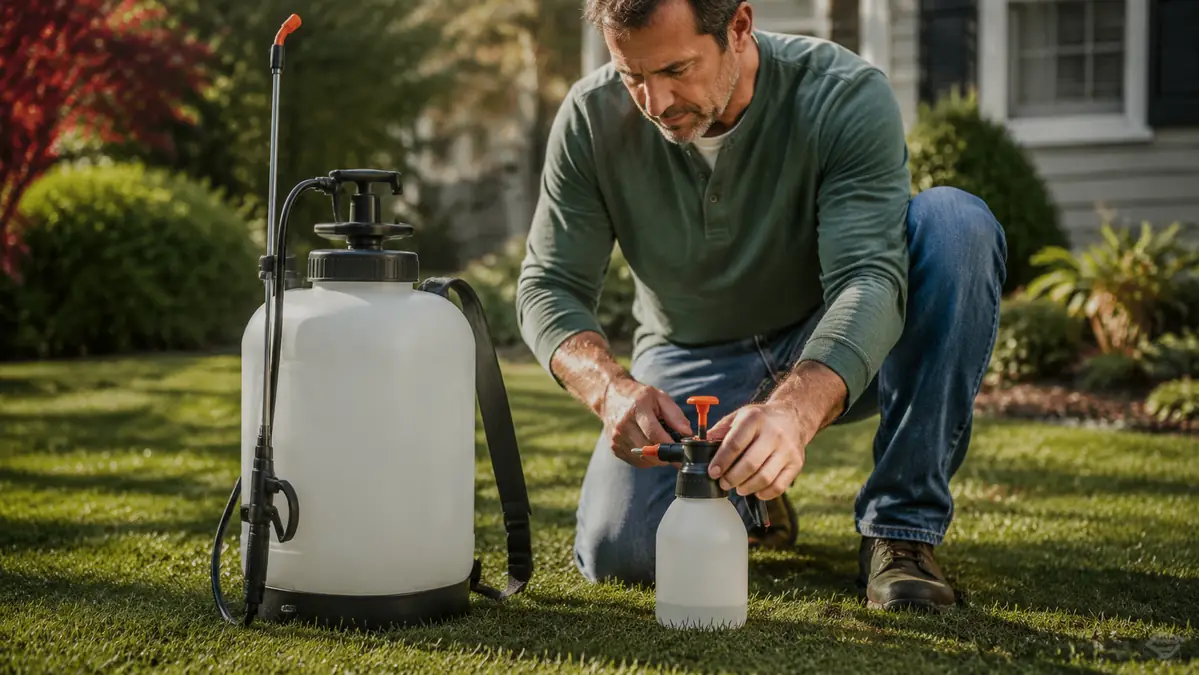
If you're standing in the garden aisle trying to decide between a backpack sprayer and the little handheld pump bottle you've used for years, here's the short answer: it depends on how much ground you're covering and how much your arm can take before it gives out. I've run both. For the last two seasons my main sprayer has been the Chapin 61500, a 4-gallon backpack unit that's become the workhorse for anything beyond a handful of rose bushes. Before that, I leaned on a 2-gallon handheld pump sprayer for almost everything, and it still lives in my shed for small jobs. This comparison isn't about crowning one sprayer king forever. It's about matching the tool to the job in front of you.
The short version: if you're treating a lawn over a few thousand square feet, spot-spraying a long fence line, or doing anything that takes more than fifteen minutes of continuous pumping, the backpack sprayer wins on comfort and coverage every time. If you're dealing with a raised bed, a dozen container plants, or a quick pass on driveway weeds, the handheld pump sprayer is lighter, cheaper, and easier to grab and put away. The real difference comes down to tank size, how the pressure gets built, and what your arm and shoulder feel like after twenty minutes of spraying.
| Feature | Chapin Backpack Sprayer | Handheld Pump Sprayer |
|---|---|---|
| Tank Capacity | 4 gallons (Chapin 61500) | 1 to 2 gallons typical |
| Pump Style | Foot-assist piston pump with hip-mounted lever, hands mostly free while walking | Manual trigger or top-mounted plunger, requires constant hand pumping |
| Continuous Spray Time Between Pumps | 60-90 seconds of steady spray per pump cycle | 15-20 seconds before pressure drops noticeably |
| Weight When Full | About 38 lbs, carried on padded shoulder straps | About 17 lbs (2-gallon), carried in one hand or shoulder strap |
| Filtration | 2-stage filtration (fill screen plus nozzle screen), fewer clogs with wettable powders | Single fill screen, more prone to nozzle clogging |
| Nozzle Options | Adjustable poly fan/cone nozzle, 2-6 ft spray width | Fixed or single adjustable nozzle, narrower fan pattern |
| Coverage Per Fill | Up to 4,000-5,000 sq ft depending on spray rate | 1,000-1,500 sq ft per fill |
| Current Price | Today's price sits in the $65-$75 range | Typically $15-$25 |
| Best For | Full lawns, fence lines, orchard rows, large vegetable gardens | Raised beds, container plants, quick spot treatments |
Where the Chapin Backpack Sprayer Wins
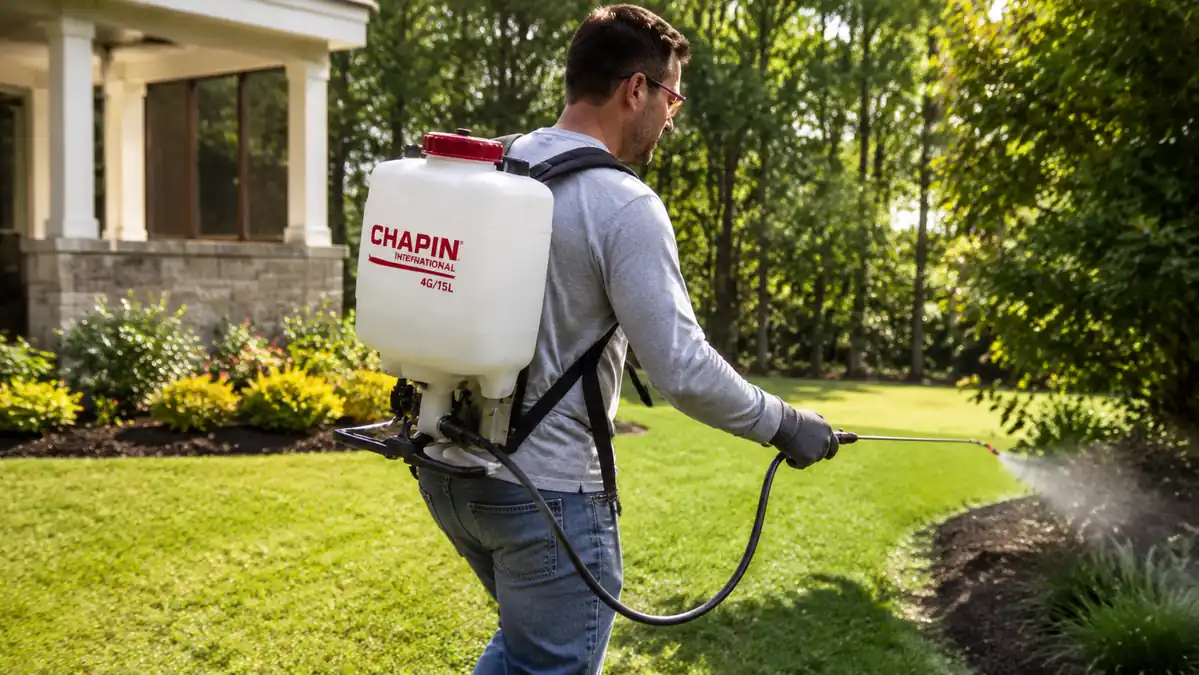
The first time I strapped on the Chapin 61500 to treat my back lawn, about 4,200 square feet of fescue with a broadleaf weed problem, I finished the whole area in one fill. That's the biggest practical difference: a 4-gallon tank versus the 1 to 2 gallons most handheld pump sprayers hold. I wasn't stopping every five minutes to refill a bottle and mix another batch of herbicide. The padded straps distribute the weight across both shoulders instead of one wrist, and the cushion-grip shut off valve means my hand isn't cramping by the time I reach the far fence line.
Pressure is the other thing you notice. A handheld pump sprayer needs you to stop and re-pump every few minutes as the pressure drops, which means your spray pattern gets inconsistent, strong right after pumping, weak right before. The Chapin's internal piston pump lets you keep a steady stream going for several minutes between pumps, and because the pump handle sits right at your hip, you can keep walking and pumping at the same time without breaking stride. For anyone treating more than a small bed, that consistency translates directly into fewer streaky patches and less wasted herbicide.
The tank itself is translucent polyethylene, which sounds minor until you're three weeks into spraying season and need to glance down to see how much mix is left without unstrapping and popping the lid. I've run everything through mine from liquid fertilizer to fungicide to a diluted weed killer mix for a gravel driveway, and the poly tank hasn't degraded or discolored. The padded adjustable straps also make a real difference on a 90-degree July afternoon. My old handheld sprayer left a groove in my palm after twenty minutes of pumping. With the Chapin strapped on, my hands stay free for the wand and shut-off valve, and the weight sits on my hips and shoulders instead of one arm.
There's also the shut-off valve itself, a cushion-grip trigger right at the end of the wand that you can lock open for long, steady passes across open lawn, or feather for careful spot spraying around flower beds. That kind of fine control is hard to replicate one-handed while you're also pumping a handheld sprayer to maintain pressure.
Where the Handheld Pump Sprayer Wins
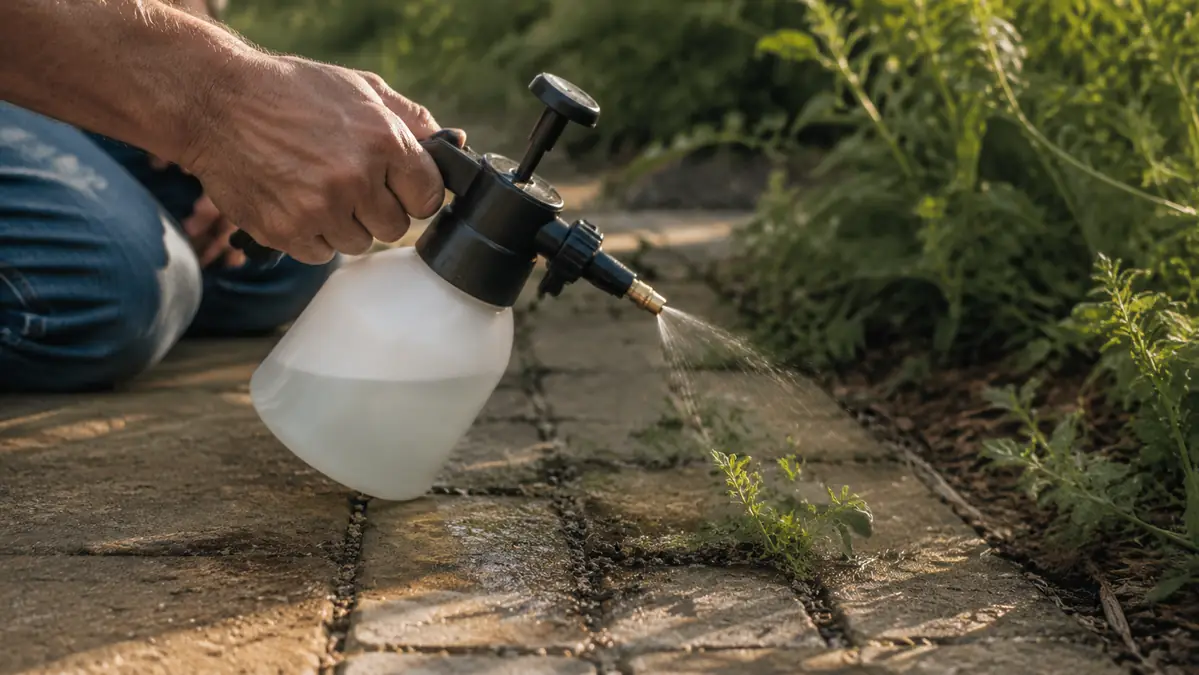
None of this means the little pump sprayer is obsolete. If you've got six tomato plants and a fungicide to apply, filling and strapping on a 4-gallon backpack unit is overkill. A 1 or 2-gallon handheld sprayer takes ten seconds to fill at the spigot, weighs next to nothing, and you can be done and back inside before the backpack sprayer would even be primed. For quick, low-volume jobs like spot-treating a few weeds in a gravel path or misting a couple of container plants with neem oil, the handheld sprayer is simply faster to deploy.
Storage and price matter too. A handheld pump sprayer costs a fraction of a backpack unit and takes up a shelf, not a hook on the wall. If you're a renter with a small patio garden, or you only spray a handful of times a year, spending more on tank capacity and shoulder straps you'll rarely need doesn't make sense. The tradeoff is that you'll be pumping constantly to maintain pressure, and your arm will feel it well before you'd feel it in a backpack sprayer covering the same square footage.
Maintenance is simpler too. A handheld pump sprayer has fewer parts to rinse out, no shoulder straps to hose down, and nothing to hang on a hook that takes up real estate in the shed. If you're spraying insecticidal soap on houseplants you bring outside for the summer, or you need something you can toss in the trunk for a quick job at a rental property, the handheld sprayer's simplicity is the whole point. It's not trying to be a lawn-treatment tool, and it doesn't need to be.
Tired of refilling a bottle every five minutes? See today's price on the Chapin 61500.
One fill, one pass across the whole yard. Check current availability and pricing on Amazon.
Amazon Check Today's Price on Amazon →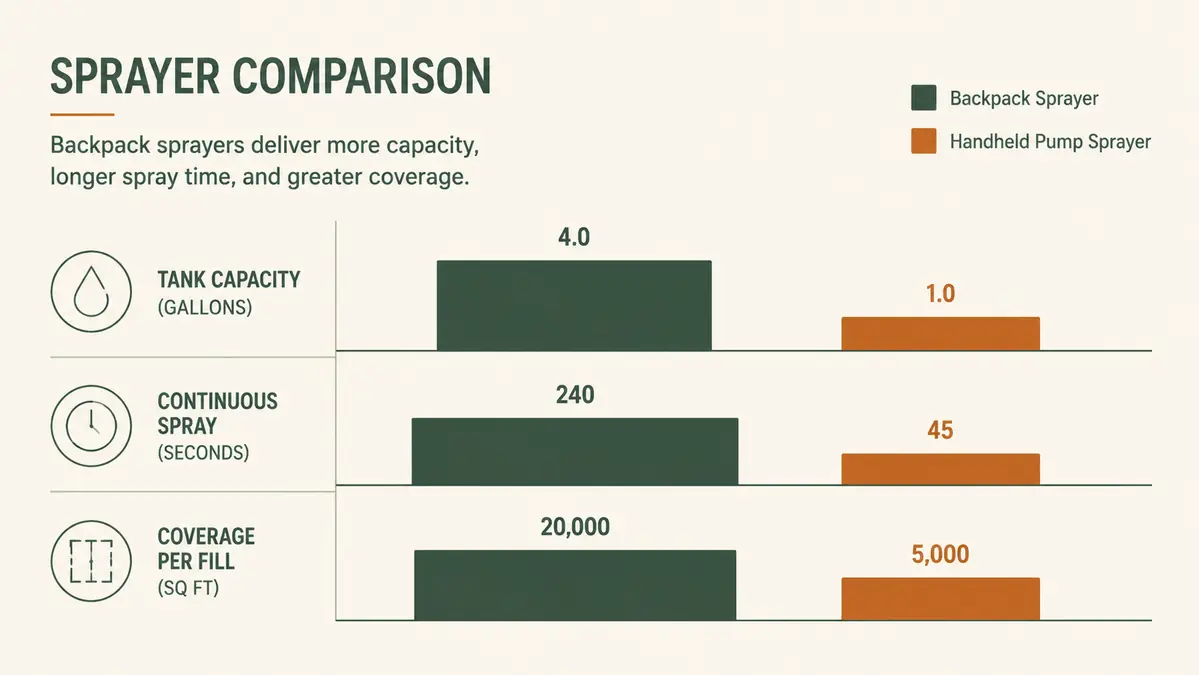
Maintenance and Cleaning: What Each One Actually Takes
Cleaning is where the size difference cuts the other way. After every use with herbicide or fungicide, I flush the Chapin with a gallon of clean water, pump it through the wand, and let it drain before storing it upside down to dry. That takes about five minutes, but it's the same five minutes regardless of whether I used the full 4 gallons or just 1. The handheld sprayer takes less time to flush simply because there's less tank to rinse, maybe two minutes start to finish. If you're someone who sprays multiple different chemicals in a single afternoon and needs to swap tanks fast, the handheld's quick turnaround adds up.
Parts availability matters long-term too. Chapin sells replacement gaskets, nozzles, and pump assemblies directly, so when the shut-off valve on mine started dripping after about 18 months of regular use, I ordered a replacement O-ring kit instead of buying a whole new sprayer. Most handheld pump sprayers in the $15-$25 range don't have that kind of parts support. When the pump mechanism wears out on a cheap handheld unit, and it will after a season or two of regular use, you're usually just replacing the whole thing rather than repairing it.
Winter storage is another spot where the gap shows. Chapin recommends running a cup of RV antifreeze through the pump before the cold months to protect the internal seals, a five-minute job I do every November before the sprayer goes on the garage shelf. A handheld pump sprayer needs the same basic winterizing, but because the pump assembly is smaller and cheaper to replace, most people just don't bother and buy a new one in spring if the old one cracked. Neither approach is wrong, it just depends on whether you'd rather spend five minutes in November or fifteen dollars in April.
Who Should Buy Which
If your yard is a quarter acre or more, if you're treating a lawn for weeds or grubs, spraying a fence line for poison ivy, or applying fungicide across a full vegetable garden, get the backpack sprayer. The Chapin 61500 holds enough mix to finish most residential lots in one fill, and the two-stage filtration keeps the nozzle from clogging when you're using wettable powders, which was a constant headache with my old handheld unit. If your spraying needs are limited to a raised bed, a row of containers, or the occasional weed along the sidewalk, keep a cheap handheld pump sprayer on hand instead, or use both like I do now, backpack for the lawn, handheld for spot jobs.
I'll be honest about my own setup: I own both, and I'm not switching either one out. The handheld pump sprayer stays under the kitchen sink for quick jobs, houseplants, a weed here and there, spot-treating aphids on the roses. The Chapin backpack sprayer lives in the garage and comes out for anything that touches the whole yard: pre-emergent in early spring, broadleaf weed control in the lawn, and a fungicide pass on the vegetable garden mid-summer. If I had to own just one, and my yard was bigger than a small patio, I'd pick the backpack sprayer every time. The extra tank capacity and the two-stage filtration alone have saved me more refill trips and clogged nozzles than I can count.
Cost-per-year is worth thinking about too. The Chapin costs roughly three to four times what a basic handheld sprayer runs today, but mine is heading into its third season without a single leak or crack, and Chapin backs it with a one-year warranty on the pump. A handheld pump sprayer at that price point is often a one or two season tool before the trigger mechanism gives out or a seal cracks in the cold. If you're spraying regularly, the backpack sprayer's higher upfront cost spreads out to less than the price of a couple of replacement handheld sprayers over the same stretch of years.
None of this is a knock on the handheld sprayer. It's still the right tool in the right situation, and I'd never talk someone with a small container garden into a backpack unit they'll strap on twice a year and let gather dust in the garage. Buy for the size of the job you actually do most often, not the biggest job you might do once.
How I Decide Which One to Grab
My rule of thumb by now is simple: if the job takes longer than fifteen minutes or covers more than a couple hundred square feet, I reach for the backpack sprayer without thinking twice. Anything smaller than that, and hauling out four gallons of mix I'll only use a quarter of feels like more setup than the job deserves. Square footage isn't the only factor either. Terrain matters. My side yard has a slope that makes a handheld sprayer awkward to use one-handed while I'm also trying not to slide down the hill, so even for a smaller area there, the two-handed control of the backpack wand wins.
The other factor is what I'm spraying. Anything that needs to sit and dwell on the leaf surface for a while, like a systemic herbicide, benefits from the steady, even pressure a piston pump sprayer holds. Quick contact sprays like insecticidal soap on a handful of aphid-covered stems don't need that level of consistency, so the handheld bottle is fine. Once you've used both for a season, you start reaching for the right one automatically instead of grabbing whatever's closest.
Wind is the other variable I didn't expect to matter as much as it does. With the backpack sprayer's longer wand, I can hold the nozzle closer to the ground and closer to the target plant, which cuts down on drift on breezy days. A handheld sprayer's shorter wand, or in some cases no wand at all, just a nozzle on the bottle itself, means you're often spraying from a higher angle and catching more wind. On a calm morning it doesn't matter much. On a gusty afternoon, the extra reach and control of the backpack sprayer keeps more of the herbicide on the leaf and less of it drifting onto plants I didn't mean to treat.
Ready to stop babying a handheld sprayer's pressure every ten steps?
See current pricing and availability on the Chapin 4-Gallon Backpack Sprayer.
Amazon Check Today's Price on Amazon →