
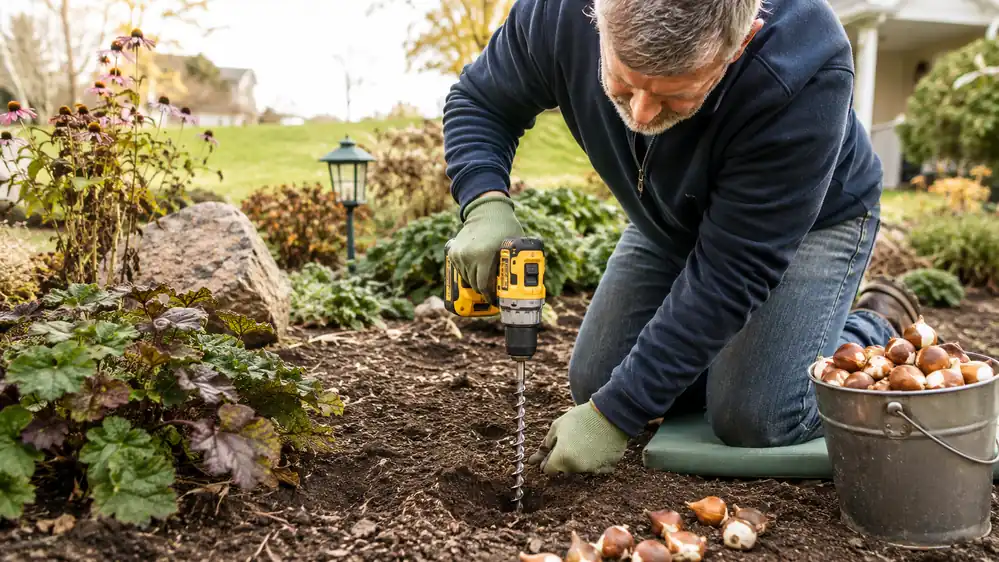
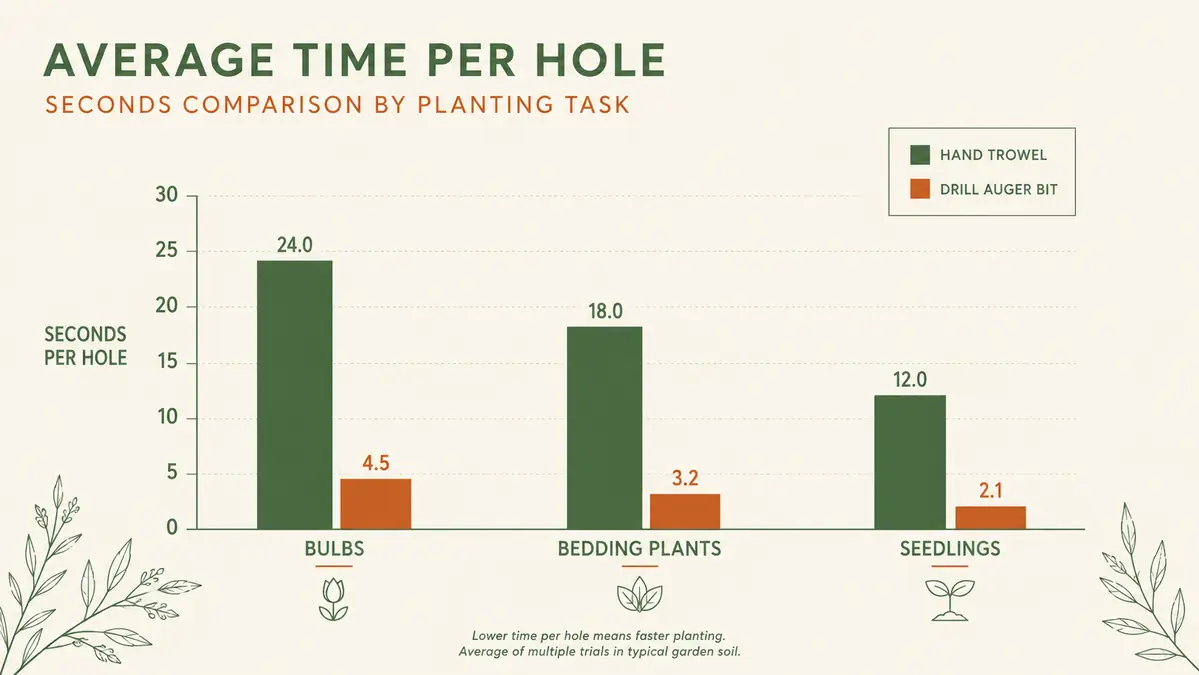
Every fall I plant somewhere between 150 and 250 tulip and daffodil bulbs along the front border and around the mailbox bed, and every fall by hole number forty my wrist is done arguing with a hand trowel. Two Marches ago I finally bought a spiral garden auger bit to chuck into my cordless drill, mostly on a whim after watching a neighbor use one to punch through our clay soil in about three seconds a hole. I've now run it through a full spring planting season, over 200 holes for bulbs, bedding plants, and a row of marigold seedlings, and I want to walk through what that actually looked like, not just a five-minute demo in soft potting mix.
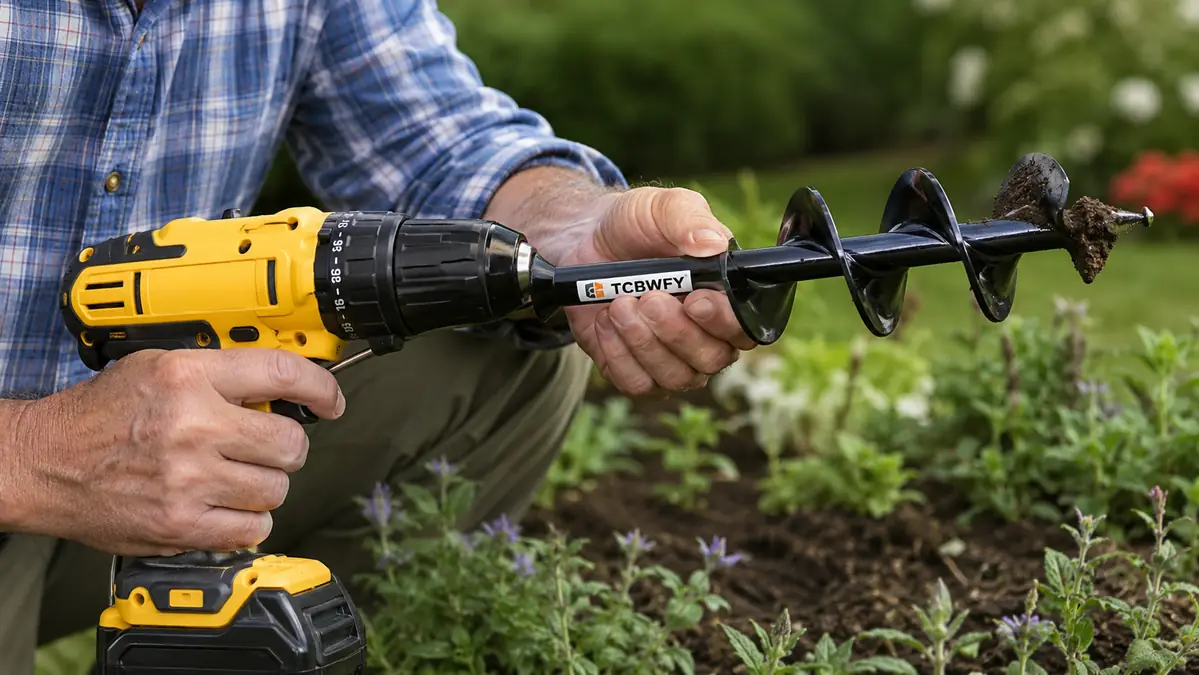
The bit I landed on is the TCBWFY auger, a 4 inch by 32 inch spiral drill bit with a hex shaft and two sharp blades near the tip. It's not a fancy tool and it doesn't pretend to be. It's a piece of twisted steel that turns your existing cordless drill into a post hole digger for small jobs, and after a season of dragging it through my yard's mix of clay and rock I have a pretty honest read on where it earns its keep and where it doesn't.
The Quick Verdict
A genuinely time-saving auger bit for anyone planting more than a dozen bulbs or bedding plants at once. It chewed through my clay soil without bogging down, though it's not a fit for every drill or every soil type.
Amazon Check Today's Price →Tired of a Sore Wrist After Forty Bulb Holes?
This 32 inch spiral auger bit turns a cordless drill into a planting tool that digs a bulb hole in about three seconds. Check today's price and current availability on Amazon before your next planting weekend.
Amazon Check Today's Price on Amazon →How I've Used It: A Full Planting Season, Not a Weekend Demo
My yard is a little under a quarter acre, with a curved front border, a mailbox bed, and six raised vegetable beds out back. Starting in early March I used the auger bit to plant a wave of ranunculus and anemone corms along the front border, then in April I switched over to bedding plants, roughly 60 marigolds, petunias, and salvia going into the mailbox bed and along the front walk. By late May I'd used it one more time to punch starter holes for a row of pepper and tomato seedlings in the raised beds, though for those I mostly just used it to loosen compacted soil rather than dig the full planting hole.
That's the kind of stretch that actually tells you something about a tool like this. A single afternoon of soft, freshly tilled soil will make almost any auger bit look great. It won't tell you whether the blades hold their edge after they hit a buried root, whether the hex shaft starts slipping in the chuck after week six, or whether the whole thing is worth the trouble compared to just kneeling down with a trowel.
Across the season I put this bit through what I'd guess is close to 200 individual holes, most of them 4 to 6 inches deep for bulbs and small plant plugs, a handful deeper for the tomato and pepper starts. I ran it off a mid-range 20-volt cordless drill, nothing commercial-grade, and I want to be upfront that the drill matters here almost as much as the bit does. More on that below.
The Dual Blade Design and How It Handled My Clay Soil
I didn't expect to have much to say about the blade geometry going in. Most auger bit listings mention sharp blades and you scroll past it. But my soil is heavy clay with a fair amount of rock mixed in from a previous owner's driveway project, and that's exactly the kind of ground that separates a decent auger bit from a cheap one.
The TCBWFY bit has two sharp cutting edges near the tip rather than one, and in practice that meant it bit into the soil almost immediately instead of skating across the surface the way a single-edge bit sometimes does. On the front border, where the clay was still a little damp from spring rain, a 6 inch hole took maybe three to four seconds once the tip caught. In the drier, more compacted mailbox bed it took closer to eight or ten seconds and I could feel the drill's motor working harder, but it never stalled out or bogged down completely.
I hit small rocks in the front border on at least a dozen occasions, nothing bigger than a golf ball, and the auger bit either chewed straight through them or kicked them up to the surface where I could pick them out by hand. I did hit one root, probably from a nearby shrub, that stopped the bit cold and required backing out and repositioning the hole a few inches over. That's not really a fault of the tool. No auger bit is going to win a fight with a live root, and a hand trowel would have had the exact same problem, just slower.
Running It on a Cordless Drill: Torque, Battery Life, and the Hex Shaft
This is the part I'd tell a friend to think about before buying, more than the bit itself. The auger has a standard hex shaft that fits any drill chuck, and that part was never an issue for me. What matters more is whether your drill has enough torque to keep the bit turning once it's a few inches deep in compacted or clay soil.
My mid-range 20-volt drill handled the front border without complaint, but in the denser mailbox bed I noticed the motor working audibly harder and I had to ease off and let it work rather than forcing it. A cheaper, lower-torque drill would likely stall in that same soil. If you're planning to use this on packed clay or a yard with a lot of clay content, I'd lean toward at least a mid-range 18 to 20-volt drill rather than a compact 12-volt driver, since the difference showed up clearly in my own testing.
Battery life was better than I expected. On a full charge I could dig somewhere between 40 and 50 holes before needing to swap batteries, which for my 200-plus hole season meant keeping a second battery charged and ready rather than stopping mid-project to charge one. I never had the hex shaft slip in the chuck once I made sure it was fully seated and tightened, though I did have it slip twice early on before I got in the habit of double-checking the chuck before each session.
What Held Up After 200-Plus Holes, and What I'd Watch For
The steel itself shows no bending or warping after a full spring, and the two blades near the tip are still sharp enough to bite into soil on first contact rather than needing to be forced. I was honestly a little surprised by that given how much rock and compacted clay I put it through. There's some surface scratching and a bit of rust staining near the tip from being left in a damp bucket overnight a couple of times, entirely my fault and not a design flaw, but I'd recommend wiping the bit down and storing it dry if you want to avoid that.
The one thing I'd flag is that the auger bit throws soil, sometimes a fair amount of it, straight up the spiral and out the top as it digs, especially in looser dirt. I learned to angle my body and wear old clothes after the first afternoon left a fine layer of clay dust on my jeans and forearms. It's not a complaint about the tool so much as a heads up, because nobody mentions it in the product photos.
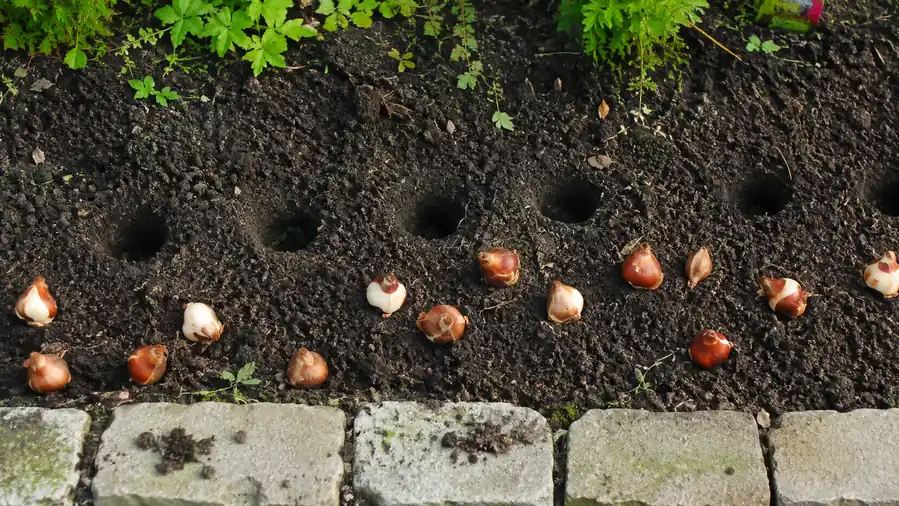
I also noticed that holes dug in wetter soil came out slightly wider than the bit itself, since the spiral tends to loosen and widen the hole as it works, which was actually a benefit for bulb planting since it gave the roots more loosened soil to establish in right away. For bedding plants with a bigger root ball, I sometimes had to widen the hole a bit further by hand, but that took seconds compared to digging the whole thing manually.
For a $12 to $15 category of tool, and the TCBWFY bit sits right around there depending on the day's price, I didn't expect it to hold up through 200-plus holes in rocky clay without a single chip in the blade edge. It did, and that's the main reason I'd buy it again.
Alternatives I Considered Before Buying
Before I bought this one, I looked at a couple of shorter auger bits, closer to 12 to 18 inches, marketed mostly for potting soil and container gardening. They're cheaper and easier to store, but the shorter length meant less clearance between the drill and the ground, and I was worried about scraping my knuckles on rocky or uneven beds. The 32 inch length on this one keeps the drill well above the soil line, which turned out to matter more than I expected once I was working a full row of holes without stopping to reposition.
I also looked at a manual bulb planter, the kind that looks like a giant cookie cutter you step on and twist by hand. It's a fine tool for a dozen bulbs, but for the scale I plant every fall, upwards of 150 bulbs some years, I ruled it out fast. My arms and knees have done that job before and I wasn't eager to repeat it.
A gas-powered one-man auger crossed my mind too, mostly because a landscaper down the street uses one for fence post holes. I ruled that out almost immediately. It's overkill, expensive, heavy, and loud for what amounts to digging a 4 to 6 inch bulb hole. The drill-powered bit gives you nearly all the speed benefit at a fraction of the cost and noise.
What I Liked
- Dual sharp blades bit into rocky clay soil on first contact, no forcing needed
- 32 inch length keeps the drill well above ground level, easier on the back and knees
- Held a sharp edge through 200-plus holes with no chipping
- Widens the hole slightly as it digs, which helped loosen soil around bulb roots
- Standard hex shaft fits any cordless drill chuck without an adapter
Where It Falls Short
- Throws soil up and out as it digs, so old clothes are a good idea
- Needs a mid-range or stronger drill to avoid bogging down in dense clay
- Stopped cold on the one buried root it hit, same as any auger would
- Left unwiped, the tip picked up light rust staining after damp storage
It's a piece of twisted steel that turns a cordless drill into a post hole digger for small jobs, and after a season of clay and rock I have an honest read on where it earns its keep.
Who This Is For
If you plant bulbs by the dozen or the hundred every fall, or you're putting in a big flat of bedding plants each spring, this auger bit will save your knees and your wrist more than any other five to fifteen dollar tool I've bought for the garden. It's also worth having if your soil leans toward clay or has embedded rock, since the dual blade design handled that better than I expected going in. Anyone with a mid-range cordless drill already sitting in the garage can put this to work with zero learning curve.
Who Should Skip It
If you're only planting a handful of bulbs or a few container plants each season, a hand trowel will do the job just as well and you won't need to keep a spare charged battery around. And if your only drill is a small, low-torque compact driver, you may find yourself fighting the tool in dense soil rather than being helped by it, in which case either upgrading the drill or sticking with a manual bulb planter makes more sense than fighting this bit with underpowered hardware.
Ready to Dig 200 Bulb Holes Without Wrecking Your Wrist?
The TCBWFY spiral auger bit is available today on Amazon. Check current pricing and availability before your next planting weekend.
Amazon Check Today's Price on Amazon →