
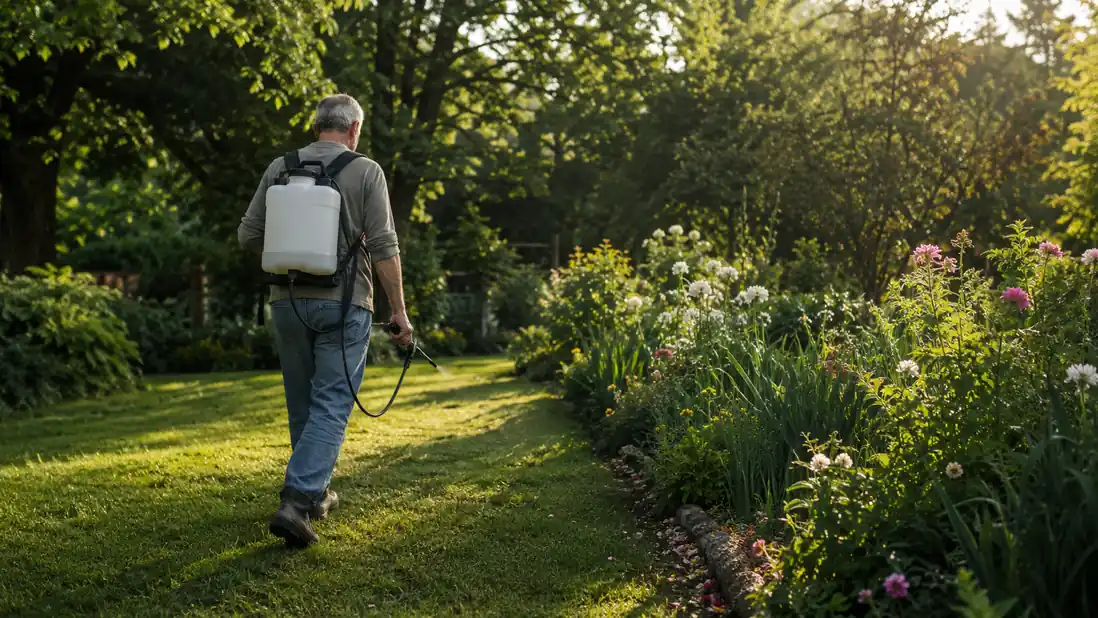
I used to dread weed season. My half-acre lot in Zone 7 has three separate beds, a fence line thick with bindweed, and a gravel driveway that grows crabgrass like it's a crop. For years I dragged a two-quart handheld pump sprayer around the yard, stopping every few minutes to squeeze the trigger until my forearm cramped. Then I strapped on a Chapin 4-Gallon Backpack Sprayer, the Euro-style model with the cushion grip shut-off, and the whole chore changed. If you're still hauling a little spray bottle around your yard, here are ten reasons a backpack sprayer earns a permanent spot in the shed.
A backpack sprayer isn't just a bigger bottle strapped to your back. The 4-gallon tank on the Chapin holds enough diluted herbicide or fertilizer to cover my entire property in one pass, and the internal pump builds pressure so I'm not squeezing a trigger three hundred times an hour. Here's what actually changed once I switched, one reason at a time.
Stop Refilling a Two-Quart Bottle Every Ten Feet
The Chapin 4-Gallon Backpack Sprayer covers a full yard in one fill and keeps steady pressure from the first pump to the last. See today's price and decide if it fits your yard.
Amazon See Today's Price on Amazon →A Full Yard Without a Refill Trip
My old handheld sprayer held two quarts. That was maybe one flower bed before I was back at the spigot mixing another batch. The Chapin's 4-gallon tank holds enough mixed herbicide to cover my entire quarter-acre backyard, the gravel drive, and the fence line in a single fill. For anyone with more than a small patio garden, tank size is the difference between finishing a job in one session or breaking it into three trips across a weekend. I broke down exactly how long a full tank lasts me in my full season review of this backpack sprayer.
Hands-Free Pumping While You Walk
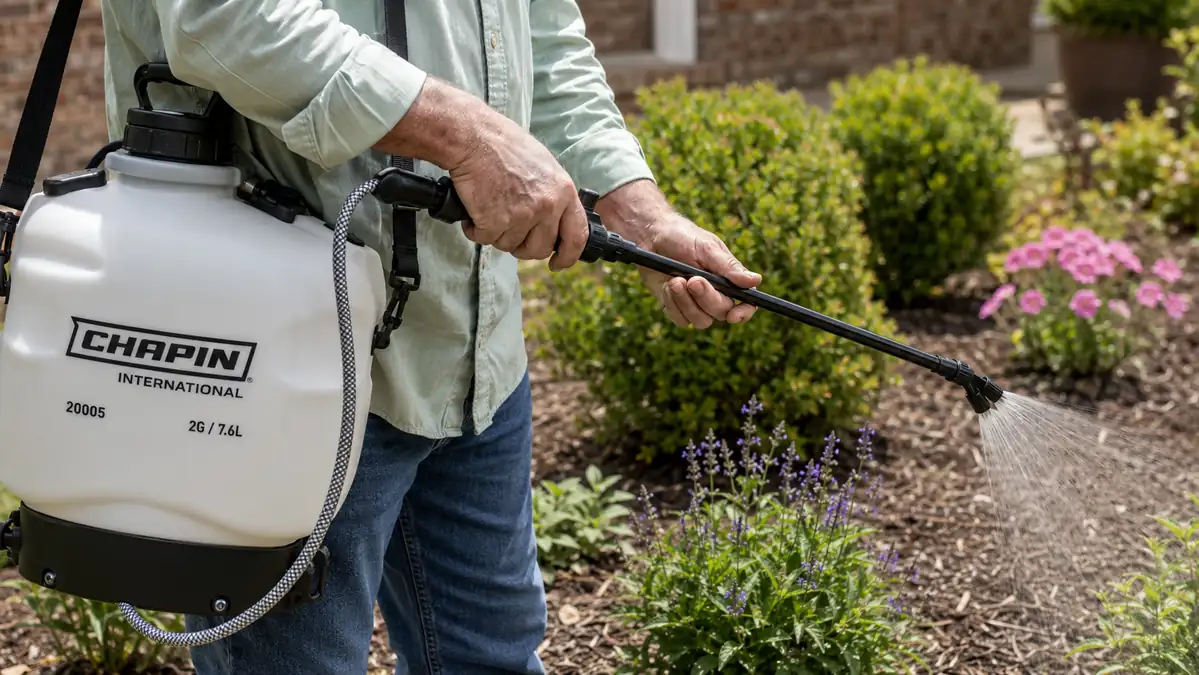
With a backpack sprayer, the pump handle sits off to the side, so you're pumping with one hand while you walk and spray with the other. I can cover a fifty-foot row of tomatoes without stopping to reset anything. Compare that to a pump-and-spray handheld bottle, where you're stopping every ten feet to build pressure back up. That single design difference is why I now finish weeding jobs in twenty minutes instead of an hour. No more shaking my arm out mid-row to work the cramp loose, no more losing my rhythm because the spray sputtered. I just keep walking the line.
Steadier, More Even Pressure
A handheld bottle sprays hard right after you pump it, then trickles out weak thirty seconds later. That uneven pressure means uneven coverage, and with weed killer, uneven coverage means missed weeds and wasted product. The Chapin's internal pressure chamber holds a more consistent stream from a full tank down to nearly empty, so the last pass over my driveway cracks gets roughly the same dose as the first.
Padded Straps Save Your Shoulder and Wrist
I used to finish a spraying session with a sore forearm from squeezing a trigger and an aching shoulder from holding a jug out at arm's length. The Chapin's padded, adjustable straps put the weight on my back and hips instead, the way a hiking pack does. My wrist barely does any work now beyond flipping the cushion grip shut-off valve open and closed. After a full afternoon of spraying fence lines and garden beds, I still had energy left to mow, which almost never happened with the old handheld setup.
One Sprayer for Weed Killer, Fertilizer, and Pest Control
I rotate this same backpack sprayer through three jobs a season: broadleaf herbicide on the lawn in spring, liquid fertilizer on the vegetable beds in early summer, and insecticidal soap on the roses when aphids show up. As long as I rinse the tank thoroughly between chemicals, one backpack sprayer replaces three single-purpose spray bottles cluttering the shed shelf.
Nozzle Options for Different Jobs
The poly fan and cone nozzles that come with the Chapin let me switch between a wide, gentle mist for foliar feeding and a narrow, concentrated stream for spot-treating a single dandelion in the lawn. A basic handheld bottle usually gives you one spray pattern and that's it, which means compromising on every job that isn't exactly what the nozzle was built for. Swapping nozzles takes about ten seconds, so I'll fan-spray the lawn edge, then switch to the cone tip for a targeted shot right at the base of a stubborn thistle.
I stopped thinking about my sprayer and started thinking about my weeds. That's the whole point of buying the right tool.
The Cushion Grip Shut-Off Cuts Hand Fatigue
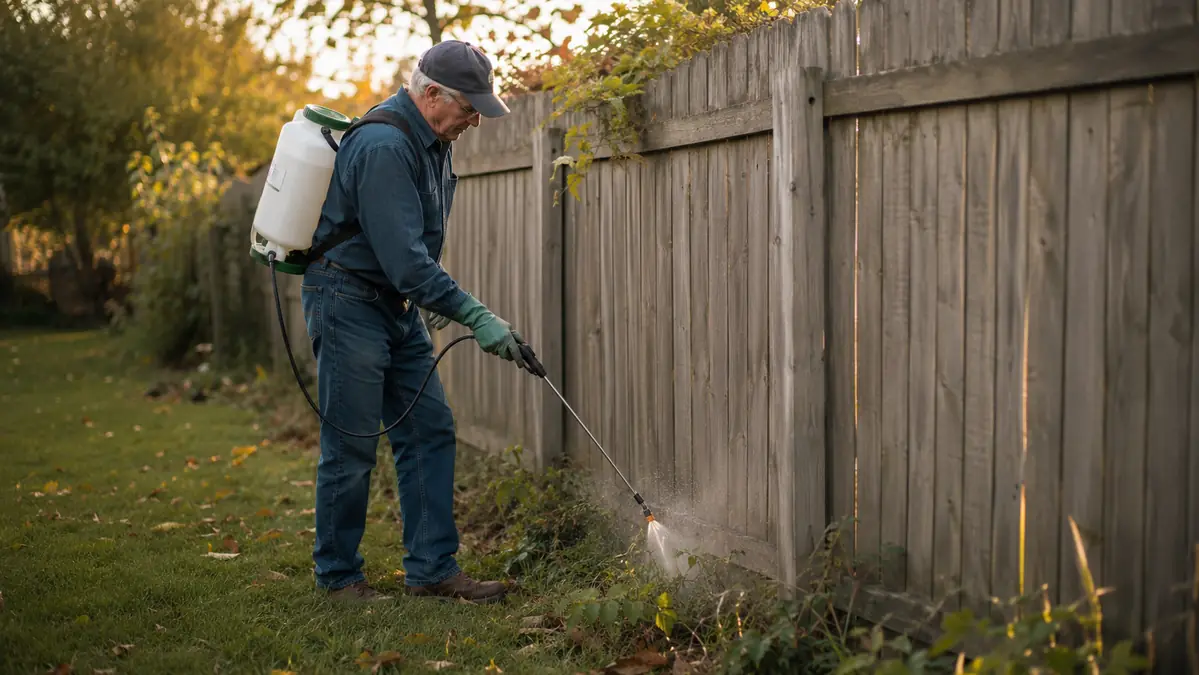
On a big job, like spraying the whole fence line for poison ivy, I'm holding that shut-off valve open for ten or fifteen minutes at a stretch. The cushioned grip on the wand means my hand isn't cramping around hard plastic the way it would on a cheap pump bottle, so I can actually finish the fence line in one pass instead of stopping to shake out my hand.
Two-Stage Filtration Means Fewer Clogged Nozzles
Nothing kills momentum on a spraying job like a clogged nozzle mid-pass. This backpack sprayer runs the mixture through a filter at the fill opening and another at the wand before it ever reaches the nozzle, so bits of undissolved fertilizer or debris get caught early. I've had exactly one clog in a full season of weekly use, and it cleared in under a minute. Compare that to my old handheld bottle, which clogged almost every time I mixed in granular fertilizer, forcing me to unscrew the nozzle and blow it out by hand.
It Actually Gets Used, Which Is the Real Win
The best tool is the one you reach for instead of putting off the chore. Because a backpack sprayer is comfortable enough to wear for twenty minutes without complaining, I actually spray on schedule instead of skipping a week because I dread the arm workout. Consistent timing matters more than the herbicide brand for keeping weeds from going to seed in the first place. A tool sitting in the shed because it's uncomfortable to use isn't saving you any time at all, no matter how good it looks on paper.
The Time Savings Add Up Over a Season
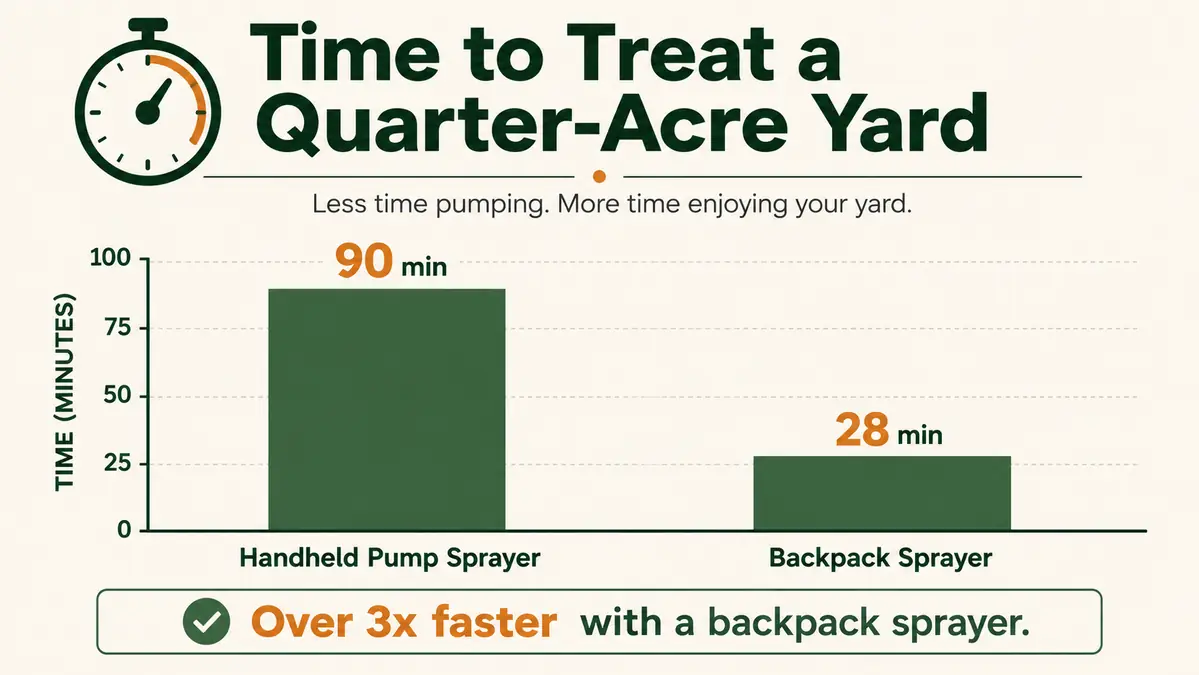
Add it up: fewer refill trips, no stopping to re-pressurize, faster coverage per pass, less hand fatigue slowing you down. On a typical Saturday I used to spend close to ninety minutes treating my yard with a handheld bottle. With the backpack sprayer, the same ground takes me under thirty. Over a full growing season, that's easily ten or twelve hours back. If you're weighing this against a basic pump bottle, I put the two side by side in this comparison.
What I'd Skip
A backpack sprayer isn't for everyone. If you've got a small patio garden or a handful of raised beds under a few hundred square feet, a one-gallon handheld pump sprayer will do the job without the extra bulk. And if you only spray once or twice a season, like a single pre-emergent application in spring, the Chapin's 4-gallon capacity is more than you'll use. I'd also skip it if you're only ever spot-treating a couple of weeds at a time. For that, a small trigger bottle is honestly faster to grab off the shelf and put away. For everything bigger than that, from a full lawn treatment to a long fence line, the extra tank capacity and steadier pressure of the Chapin backpack sprayer pay for themselves within the first couple of uses.
Ready to Spray Once and Actually Finish the Job?
Check today's price on the Chapin 4-Gallon Backpack Sprayer and stop losing your Saturday to a squeeze-handle bottle.
Amazon Check Today's Price on Amazon →