
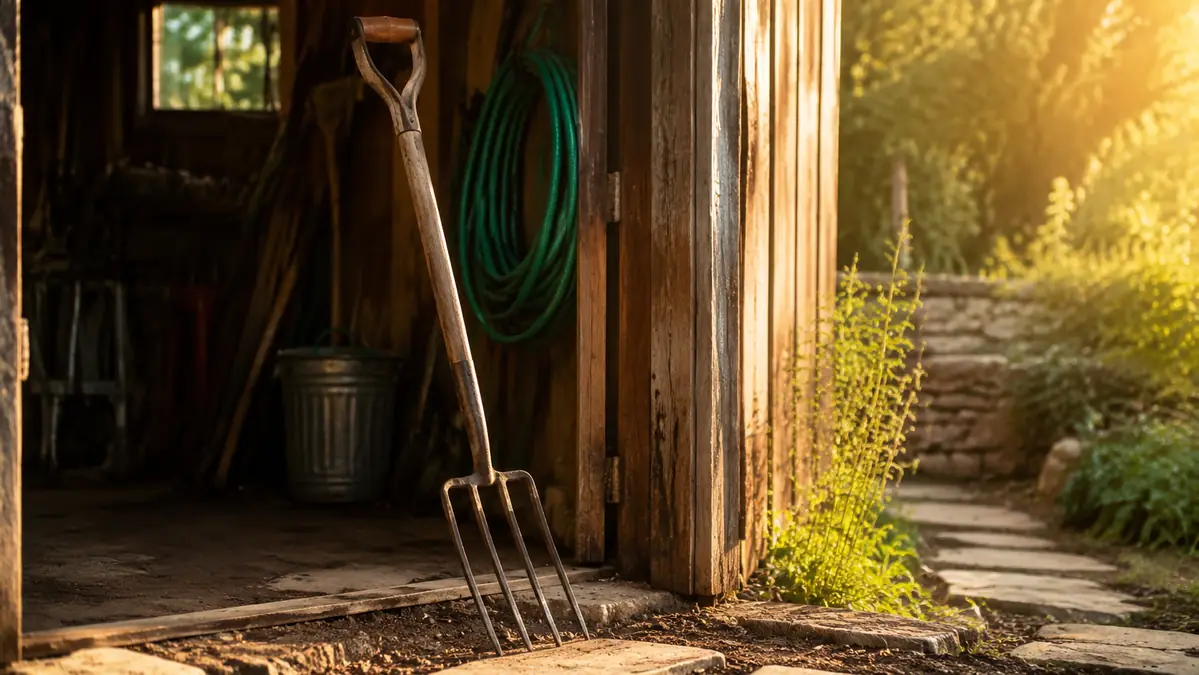
Two years ago I wrote about this Truper spading fork after one long season of clay-busting and compost turning. It's still leaning in the corner of my shed right now, handle facing out where I always grab it, and I've put enough seasons on it since then that I think I owe you the review nobody actually writes: the one that comes after the new-tool glow wears off, after the first scratch, after the first time you leave it out in the rain because you were tired and just wanted to go inside.
This isn't a takedown. I'd buy this exact model again without much thought. But if you're weighing a real spading fork against a bargain-bin one, you deserve the parts most reviews skip, the rust that showed up when I got lazy about putting it away, the one time it genuinely let me down in the ground, and whether it actually held up compared to the cheaper forks I used to burn through every other season.
The Quick Verdict
Two full seasons in, the Truper's steel head is still straight, tight, and doing its job. It rusts if you slack off on wiping it down, the handle needs occasional care, and one tine has a faint permanent kink from a hidden paver. None of that changes whether I'd buy it again.
Amazon Check Today's Price →Curious How It Actually Held Up Past Season One?
Most reviews stop at the honeymoon phase. This one covers two full years with the Truper 30293 spading fork, including the parts that don't make it into a five-star listing review. Check today's price on Amazon before you decide.
Amazon Check Today's Price on Amazon →How I've Actually Used It: Two Years, Not Two Weekends
Year one was the season I wrote about the first time, six raised beds, a perennial border, and a three-bin compost setup that got turned every few weeks from April through October. Year two is where things got more interesting for a fork, because I added a twelve-foot asparagus trench along the back fence in April, and I rented a ten-by-twenty plot at the community garden two blocks over that summer, which meant breaking ground I'd never touched before instead of working soil I already knew.
That new plot mattered because it wasn't my familiar clay. It was a mix of compacted fill dirt, old landscape gravel someone had buried, and roots from a hedge that used to run along the property line. The Truper fork had never had to deal with buried debris like that in my own yard, where I mostly know what's under the surface. This is where a tool either proves itself or starts showing you its weak points, and this fork did a bit of both, which I'll get into below.
I also lent it to my neighbor Diane for a weekend when she was dividing an overgrown clump of daylilies, which is the kind of thing you only do with a tool you trust to come back in one piece. It did, minus a scuff on the handle she apologized for more than it deserved. Between my own beds, the asparagus trench, the community plot, and Diane's borrow, I'd guess this fork has seen somewhere north of eighty sessions in the ground by now.
The Honest Price Math Nobody Runs
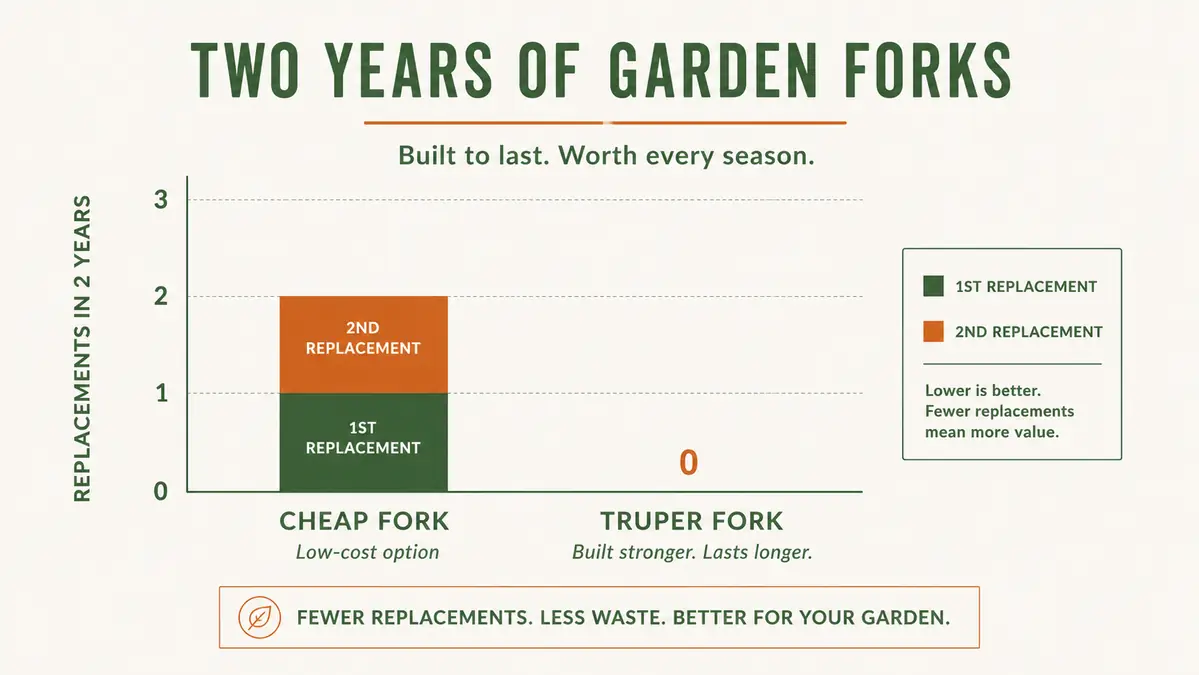
Before this Truper, I went through a cheap forged fork almost every other year. One had a tine bend permanently under normal digging pressure within a few months. Another had a fiberglass handle that developed a hairline crack near the socket by its second summer and finally snapped while I was prying up a root ball. I didn't think about the pattern until I sat down to write this, but I was essentially buying a replacement fork on a rotation, and just accepting that as normal.
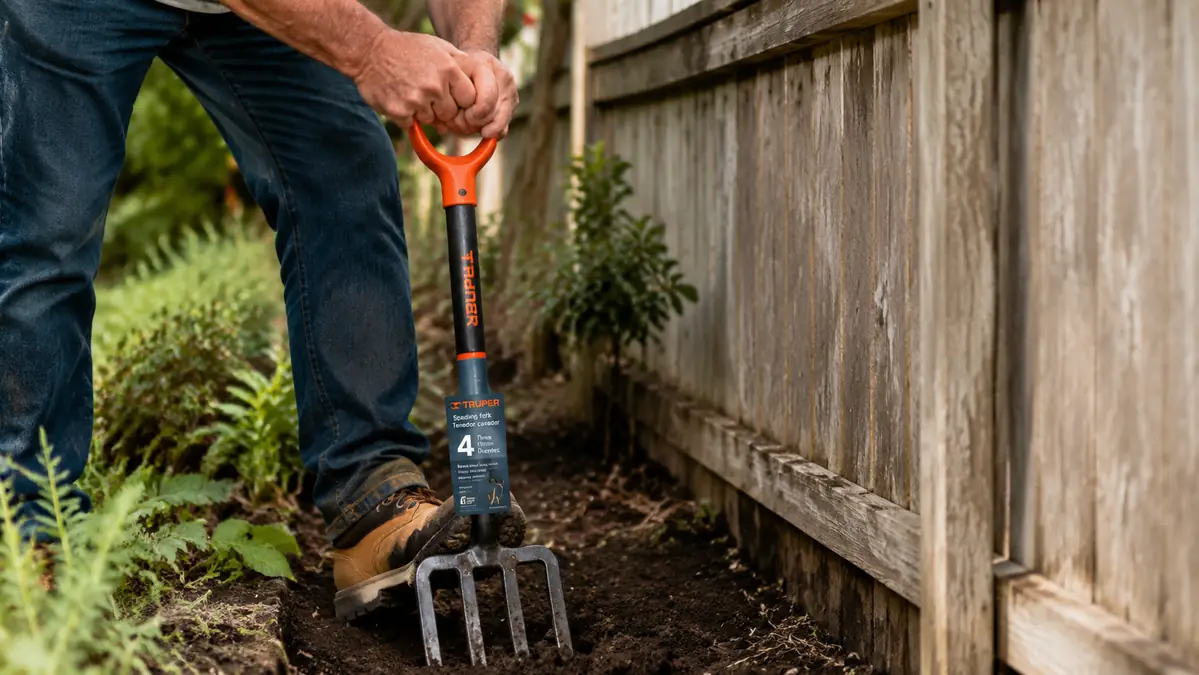
The Truper costs more upfront than those bargain forks did. That's not a secret, and any listing will tell you that much. What the listing won't tell you is what happens two years out. I haven't replaced a single part on this one. No bent tines from normal use, no cracked handle, no wobble at the socket. Run the math over two seasons instead of one purchase, and the fork that looked like the pricier option on day one is actually the cheaper one by the time you account for what I used to spend replacing the flimsy version.
I'm not going to pretend that math works for everyone. If you dig once a spring to plant a few tomatoes, a cheap fork might genuinely outlast your needs and the price difference won't matter much. But if you're doing what I do, regular bed prep, compost turning, the occasional new bed broken from scratch, the Truper has quietly saved me money by just not failing on schedule the way the cheaper stuff did.
Comparing Notes With Diane's Cheaper Fork
Since Diane borrowed mine that weekend, we ended up talking tools over the fence more than once, and it turned into an accidental side-by-side test. She'd bought a forged fork from a home-improvement store two summers ago for noticeably less than the Truper, and she's used it for roughly the same kind of work, dividing perennials, turning a small compost pile, breaking up a garden bed each spring.
Her fork looks rougher than mine does at the same age. The tines have started to splay slightly at the tips, just a few degrees, which she says happened gradually rather than from any one bad hit. The handle finish wore through faster too, down to bare wood in the grip zone within the first year, where mine took two full seasons to get there. Neither of us has done a lab test here, this is two neighbors comparing tools over coffee, but the pattern matched what I'd guess most people would find if they actually tracked it.
What struck me most is that Diane's fork still works fine for what she needs it for, so I'm not saying hers was a bad purchase. But when she saw how tight the socket still is on my Truper, and how the tines hadn't splayed at all despite a harder two years than hers, she admitted she'd probably spend the extra money next time. That's a more honest endorsement than anything I could write myself.
The Rust Nobody Warns You About
Here's the part I left out of my first review because it hadn't happened yet. Last October, we went out of town for a long weekend right after I'd used the fork to turn the compost pile, and instead of wiping it down and oiling it like I usually do, I leaned it against the shed and forgot about it. It rained twice while we were gone. When I came back, the tines had a rough orange bloom across most of the steel, not deep pitting, but real surface rust that took a scouring pad and a fair bit of elbow grease to knock back, closer to twenty minutes of scrubbing than the usual five-second wipe-down I'm used to.
That's on me, not on Truper. The steel head isn't stainless, and nothing at this price point is going to be. But I think a lot of reviews gloss over what that actually means in practice, which is that this tool asks for a five-minute habit after every session where it's touched wet soil, wipe it down, plunge it into the oiled sand bucket by my garage door, and hang it up rather than lean it. Skip that habit for one weekend and you'll see it. Skip it for a whole winter and I suspect you'd see a lot worse.
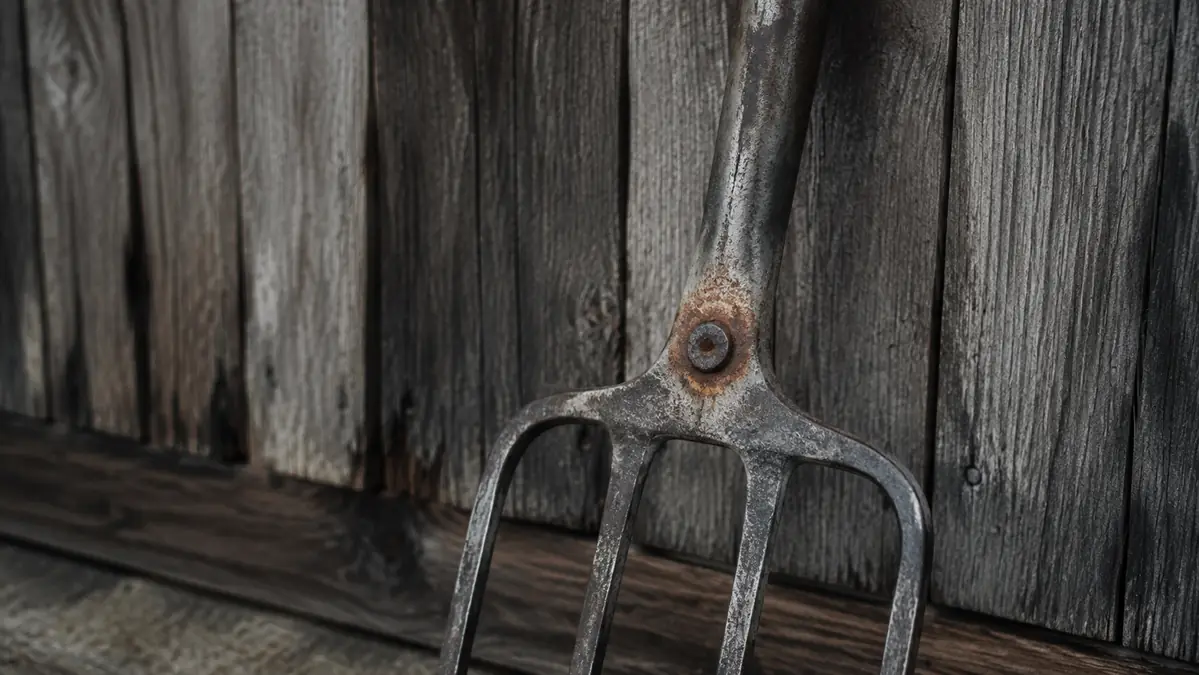
Two years in, the tines still carry a faint gray patina in spots I don't reach as thoroughly with the rag, plus a thin rust ring where the rivets meet the wood handle. It's cosmetic, not structural, and the points still slide into soil the way they did on day one. But if a listing photo has you picturing a tool that stays showroom-shiny with zero effort, that's not the honest picture.
The One Time It Actually Let Me Down
This is the story I most wanted to include, because it's the kind of thing that never makes it into a glowing review. While I was digging the asparagus trench in April of year two, I drove the fork down through a patch of old mulch and hit something solid that didn't give. Turned out to be a broken paver someone had buried under that hedge years before I moved in. One of the four tines caught the edge of it wrong and came up bent, maybe an eighth of an inch out of true, enough that I could see it clearly when I sighted down the row of tines.
I'll be honest, my first reaction was that the Truper had failed me. But thinking it through, any garden fork on the market would have bent or worse against a buried paver at that angle, and a cheaper fork likely would have snapped the tine clean off instead of just bending it. I clamped the head in a bench vise, slid a length of scrap pipe over the tine for leverage, and worked it back straight over about ten minutes. It's held true ever since, through the rest of that trench and every session since.
What I want you to take from that isn't that the Truper is fragile. It's the opposite, honestly, since a lesser fork probably wouldn't have survived that hit at all. But nobody selling this tool is going to tell you that hidden debris can still get the better of it, or that fixing a bent tine is a real possibility you should know how to handle before it happens to you. Now you know.
What the Product Photos Don't Show You
Amazon's listing photos show a fork that looks brand new, clean steel, unmarked wood, the kind of shot that makes any tool look good. Mine doesn't look like that anymore, and I don't think it should after two years of actual use. The tines have that gray-brown patina I mentioned. The handle has a matte, slightly rounded spot right where my boot rests when I'm driving it into the ground, and a faded patch where the sun hits it most afternoons. There's that thin rust ring at the rivets.
None of that has anything to do with how the Truper actually performs. It still bites into my clay beds the same way it did in April of year one, still turns compost without dragging a solid slab of wet leaves, still feels balanced in my hand for extended sessions. But if you're expecting a tool that looks pristine forever, set that expectation aside now. What you're buying is a working fork, and it's going to look like one.
What I Liked
- Steel head still straight and tight at the socket after two full seasons of real use
- Held up against soil I'd never dug before, not just my own familiar beds
- Bent tine was fixable at home in about ten minutes with basic tools
- Cost less over two years than the cheap forks I used to replace on a rotation
- Comfortable D-handle for extended digging sessions, even with gloves on
Where It Falls Short
- Rusts noticeably if you skip the wipe-down and oil habit even once
- One tine has a faint permanent kink from hitting a buried paver
- Wood handle picks up scuffs and rough patches without regular care
- Costs more upfront than a bargain-bin fork, even if it evens out later
- Not stainless, so cosmetic patina is basically guaranteed over time
A lesser fork probably wouldn't have survived hitting that buried paver at all. This one bent instead of breaking, and I fixed it myself in ten minutes.
Who This Is For
If you dig regularly, whether that's clay soil, compost turning, or breaking new ground you don't fully know the history of, the Truper earns its keep over a couple of seasons in a way a cheaper fork usually can't. It's also a good fit if you don't mind a small amount of maintenance in exchange for a tool that fixes rather than fails when it hits something hard underground. If you're the type who'd rather straighten a bent tine yourself than throw the whole tool out and start over, this one rewards that attitude.
Who Should Skip It
If you dig once or twice a year for light container work, or you know you won't keep up with the wipe-down and oil routine, you might not need this fork, and the rust I dealt with will bother you more than it should. A stainless or all-steel alternative might suit you better if maintenance isn't something you want to think about at all, even if it means giving up some of the comfort and shock absorption the wood handle provides.
Ready to See Why It's Still the Fork I Reach For?
Two years, one bent tine I fixed myself, and a steel head that's never wobbled. The Truper 30293 spading fork is available today on Amazon. Check current pricing and availability before your next season of bed prep.
Amazon Check Today's Price on Amazon →