
Every review I read before I bought a pair of gauntlet gloves last spring sounded like it came from the same script. Five stars, thorn-proof, buttery soft, changed my life. I bought into that, and I'm glad I did, but a full year of actually wearing a pair through blackberry brambles, a pyracantha hedge along my driveway, and more firewood hauling than I care to admit has taught me a handful of things none of those glowing reviews mentioned. This isn't a takedown. It's the stuff that got left out, the parts you only notice once you've worn a pair through a real calendar year instead of a single photogenic afternoon in the garden.
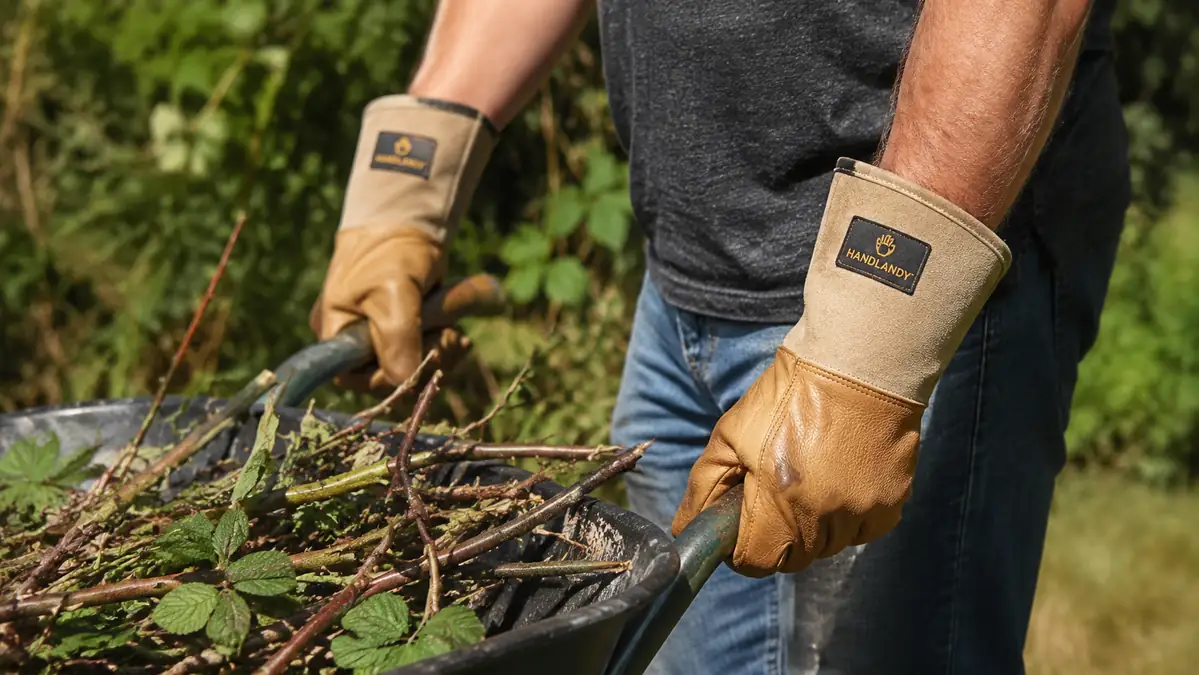
The gloves in question are the HANDLANDY rose pruning gauntlets, pigskin leather palms with a long cuff that runs most of the way up the forearm. I picked them for one reason: my pyracantha hedge has thorns closer to an inch and a half long in places, stiff enough to punch through denim if you lean into a branch wrong, and I was done getting scratched up trying to keep it in bounds twice a year. What follows is everything that surprised me, good and bad, after wearing this same pair through roughly ten months of real work, including a couple of things I had to find out the hard way.
The Quick Verdict
Genuinely thorn-resistant leather that holds up to real abuse, but the marketing oversells the comfort and undersells the break-in period. Solid gloves once you know what you're actually getting.
Amazon Check Today's Price →Skip the Marketing Copy, Judge Them on a Year of Real Use
The HANDLANDY gauntlet gloves earned their keep against a pyracantha hedge and a blackberry bramble I'd honestly stopped trying to control by hand. Check today's price and current availability on Amazon before your next brush-clearing weekend.
Amazon Check Today's Price on Amazon →How I've Actually Used These
I'm not a professional landscaper. I'm a homeowner with about a third of an acre, a blackberry bramble that crept in along the back fence from a neighbor's overgrown lot, and a pyracantha hedge the previous owner planted way too close to the driveway. Between those two things alone, I've had this pair of gloves on for brush clearing, hedge shaping, hauling cut canes to the burn pile, and stacking firewood, which isn't thorny work exactly but tears up a bare palm just as fast.
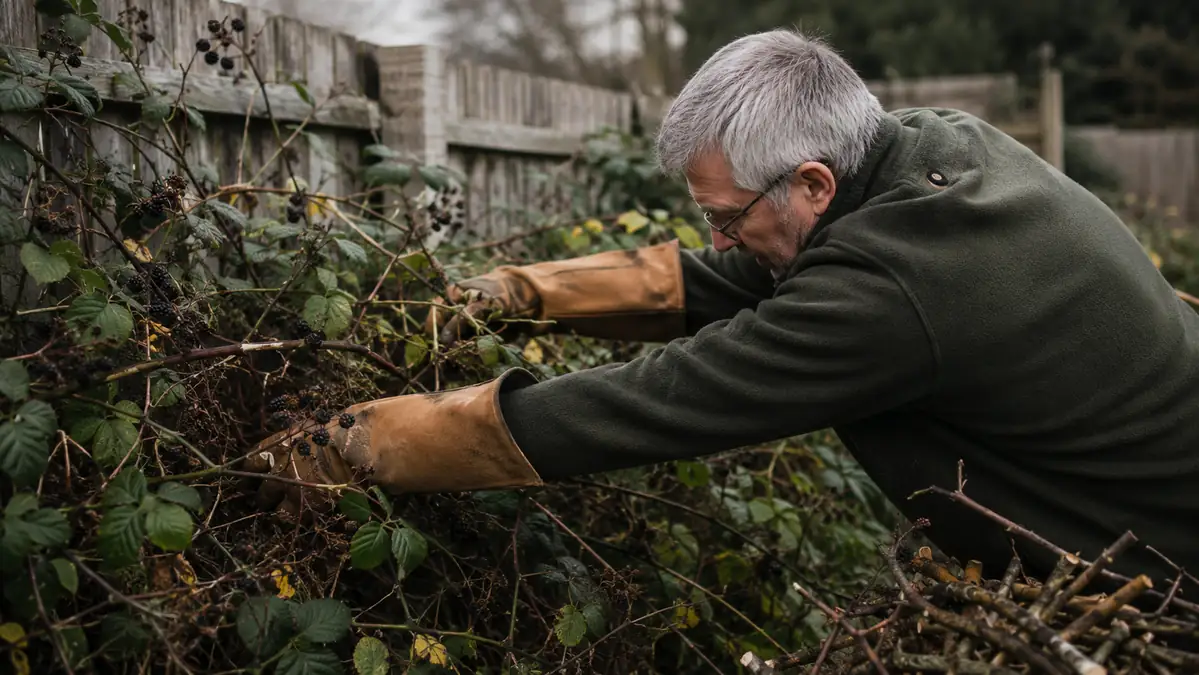
The bramble clearing was the real stress test. Blackberry canes don't just have thorns, they have thorns pointing backward along the whole length of the cane, so pulling a cut cane out of a tangle drags every thorn against your glove on the way through, not just a single clean cut like you'd get with a rose. I spent four full weekends last summer just getting that section of fence line back under control, and the HANDLANDY gloves were on my hands for most of it, hour after hour of dragging thorny canes across the same worn stretch of palm leather.
The pyracantha hedge gets a hard shaping twice a year, once in late winter and once again after the berries drop in fall, and that's maybe eight hours total of reaching into a wall of stiff, sharp branches at awkward angles, sometimes overhead, sometimes down low near the base. Add in a dozen or so firewood stacking sessions where the gloves mostly protected against splinters and rough bark rather than thorns, and you've got a pretty honest cross-section of what a homeowner actually does with a pair of gauntlet gloves over a year, not just one tidy afternoon of rose deadheading staged for a listing photo.
What the Reviews Don't Tell You About Sizing
Here's the first thing that surprised me. I ordered a large, same as I do for basically every other work glove I own, and the fit was noticeably roomier than expected in the fingers, especially the pinky and ring finger, which had enough extra room that I lost a little grip precision on smaller tools like a bypass pruner. It's not a dealbreaker, and it may just be my hand shape, but I've seen enough other reviews mention the same thing that I don't think it's a fluke. If you're between sizes, size down rather than up, which is the opposite of what most glove buying advice tells you.
The gauntlet cuff itself fits well, snug enough against my forearm that thorns haven't found a gap, but the extra room in the fingers means fine motor tasks, tying off a cane with garden twine, threading a zip tie around a bundle of brush, take a bit more concentration than they should. It's a small thing that none of the five-star reviews I read before buying bothered to mention, probably because most people writing those reviews had only worn the gloves for a session or two, not long enough to notice a fit quirk that only becomes annoying with repetition.
The Break-In Period Is Rougher Than Anyone Admits
Every review says something like "they softened up nicely." What that phrase glosses over is that for the first three or four wearings, these gloves are genuinely stiff, stiff enough that closing your fist all the way takes real effort, and stiff enough that I actually got a small blister on the inside of my right palm during the first bramble clearing session because the leather wasn't flexing with my grip yet. Nobody warns you about that. They just skip straight to "they broke in great," which is true eventually, but the first few sessions are not the comfortable experience the reviews imply.
By the fifth or sixth wearing, the pigskin leather had loosened up enough that I stopped noticing it, and by midsummer it genuinely did feel closer to a broken-in baseball glove than stiff new leather. But if you're buying these for a single big weekend project and expecting day-one comfort, temper that expectation. Wear them around the yard for some lighter tasks first if you can, raking, light trimming, anything that isn't your hardest job of the year, so the leather has a chance to loosen up before you need full dexterity.
'Thorn-Proof' Isn't the Same as Puncture-Proof
This is the one that actually matters most, and it's the one the marketing language skates around. HANDLANDY calls these thorn-proof, and for the vast majority of what I threw at them, rose thorns, blackberry brambles, pyracantha spikes, that held up. But I did get one puncture, a single sharp poke through the leather near the base of my index finger, from a broken-off pyracantha thorn that had snapped to a jagged point rather than staying rounded. It didn't go deep, more of a pinprick than a real wound, but it happened, and it's proof these gloves reduce risk dramatically rather than eliminating it entirely.
I say this not to scare anyone off but because I think it's the honest baseline. Leather this thickness stops the overwhelming majority of what a home garden throws at it. It is not armor. If you're working around something genuinely nasty, like old rusty wire hidden in brush or broken glass, treat these the way you'd treat any leather work glove: as serious protection, not an invincibility cheat code. The HANDLANDY name on the label is well earned for what it's built for, but read "thorn-proof" as "thorn-resistant" and you'll have accurate expectations going in.
The Smell, the Sweat, and the Other Small Stuff Nobody Mentions
Small thing, but real. Out of the packaging, these have a strong leather smell that took a couple of weeks of regular wear and open-air storage to fade to something unnoticeable. If you're sensitive to that kind of thing, air them out on a hook for a few days before your first big session rather than pulling them straight from the box for a long afternoon of work. It's not unpleasant exactly, just stronger and more lingering than I expected from a product photo that gives you no sense of how a glove actually smells.
On the sweat front, the mesh panels on the back of the hand and cuff do help, and I want to give credit where it's due there, but a full leather palm in a Texas summer is still a full leather palm. During the hottest stretch of July, doing an hour-plus of continuous hedge work, my hands were noticeably sweatier than they'd be in a lighter cloth glove. That's true of basically every leather gauntlet glove on the market, not a HANDLANDY-specific flaw, but it's worth knowing going in if you're gardening somewhere hot and humid rather than picturing a cool spring morning like most of the product photos show.
One more thing nobody mentions: the long cuff, while great for thorn coverage, catches on things you wouldn't expect. It snagged twice on a chain-link fence gate latch and once on a low branch I wasn't even paying attention to, enough to stop me mid-motion both times. Not dangerous, just a mildly annoying tradeoff for the extra forearm coverage that a shorter-cuff glove wouldn't have.
Where the Stitching Actually Gives Out
After about ten months, the stitching along the base of my thumb started to fray, the same spot that seems to be the common failure point across most of the reviews I've since gone back and read more carefully. It hasn't opened into a hole and I haven't lost any protection there, but I don't think it's an isolated case. If you're rough on gloves, expect that seam to be the first thing that needs attention, probably somewhere in the second season of regular use rather than the first.
The cuff elastic, by contrast, has held up completely, still snug against my forearm with zero sag after nearly a year. And the palm leather itself, the part actually doing the thorn-stopping work, shows scuffing and a darker, softer patina but no wear-through anywhere. So the honest picture is a glove that's genuinely durable where it counts most, with one predictable weak seam that a little proactive care, a drop of clear thread sealant, or just being ready to hand-stitch it yourself down the road, would extend even further.
The gloves protect exactly as well as advertised. It's the comfort claims and the break-in timeline where the marketing gets a little generous.
Was It Worth the Money After a Year
Priced around sixteen dollars at today's rate, this pair has held up well enough that I haven't once thought about replacing it, and I'm someone who's cycled through three or four cheaper cloth-and-suede gloves in a single season before. Divide the cost across ten months of real, repeated abuse and it's a pretty easy number to justify, especially against the alternative of another year of scratched-up forearms. I wouldn't call these premium, expedition-grade gear, and they're not priced like it either, but for what a home gardener actually needs against real thorns, the value has held up better than I expected going in.
What I Liked
- Genuinely stopped nearly everything a blackberry bramble and a pyracantha hedge threw at it over a full year
- Mesh-and-leather cuff construction breathes better than a full leather work glove
- Cuff elastic held its shape with zero sag after ten months of regular wear
- Palm leather shows no wear-through despite heavy brush-clearing and firewood use
- Broke in into genuinely comfortable, flexible leather by the fifth or sixth wearing
Where It Falls Short
- Fingers run roomier than expected, size down if you're between sizes
- Stiff enough in the first few sessions to cause a blister before it breaks in
- One puncture from a broken, jagged thorn proves 'thorn-proof' isn't literal
- Strong leather smell out of the box takes a couple weeks to fade
- Thumb seam started fraying by month ten, a known weak point across other reviews too
Who This Is For
If you're dealing with real thorny brush, blackberry brambles, pyracantha, roses with mature woody canes, or you just do enough rough yard work that a standard cloth glove keeps tearing through in a season, these are worth the money. They're also a good fit if you'd rather know the honest limits going in than get surprised by them mid-project the way I was. Once you account for the sizing quirk and the break-in period, the actual protection over a full year of hard use has been solid, and that's the part that matters most for anyone clearing land that fights back.
Who Should Skip It
If your gardening is mostly container plants, light weeding, or a small flower bed with nothing sharper than a rose bush you deadhead occasionally, you don't need this much glove, and the roomier fingers will bug you more than the thorn protection will help you. Anyone who needs fine dexterity for detail work, seed starting, delicate transplanting, small hand pruning, will find these clumsy compared to a thin cloth pair. And if the idea of a single puncture anywhere in a review makes you want a guarantee of zero risk, no leather glove at this price point is going to give you that. Go in with realistic expectations and these do their job well.
Now You Know What the Five-Star Reviews Left Out
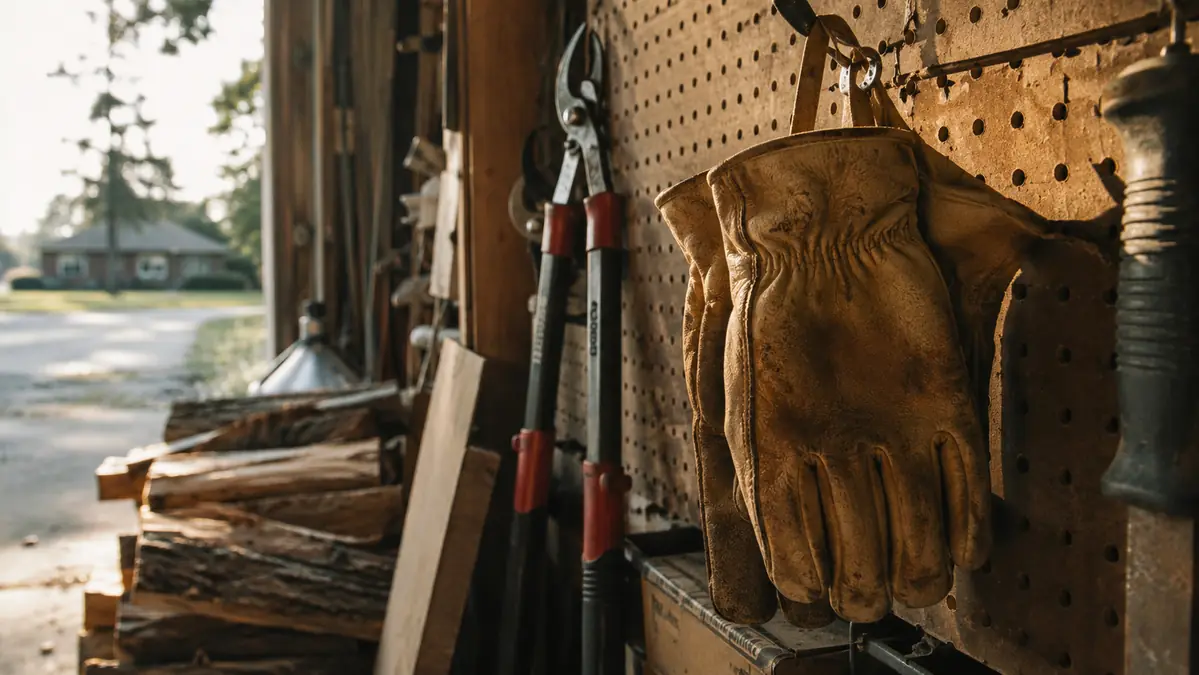
The HANDLANDY pigskin leather gauntlet gloves are still, after a full year of honest wear, the pair I reach for first against real thorns. Check current pricing and availability on Amazon before your next brush-clearing weekend.
Amazon Check Today's Price on Amazon →