
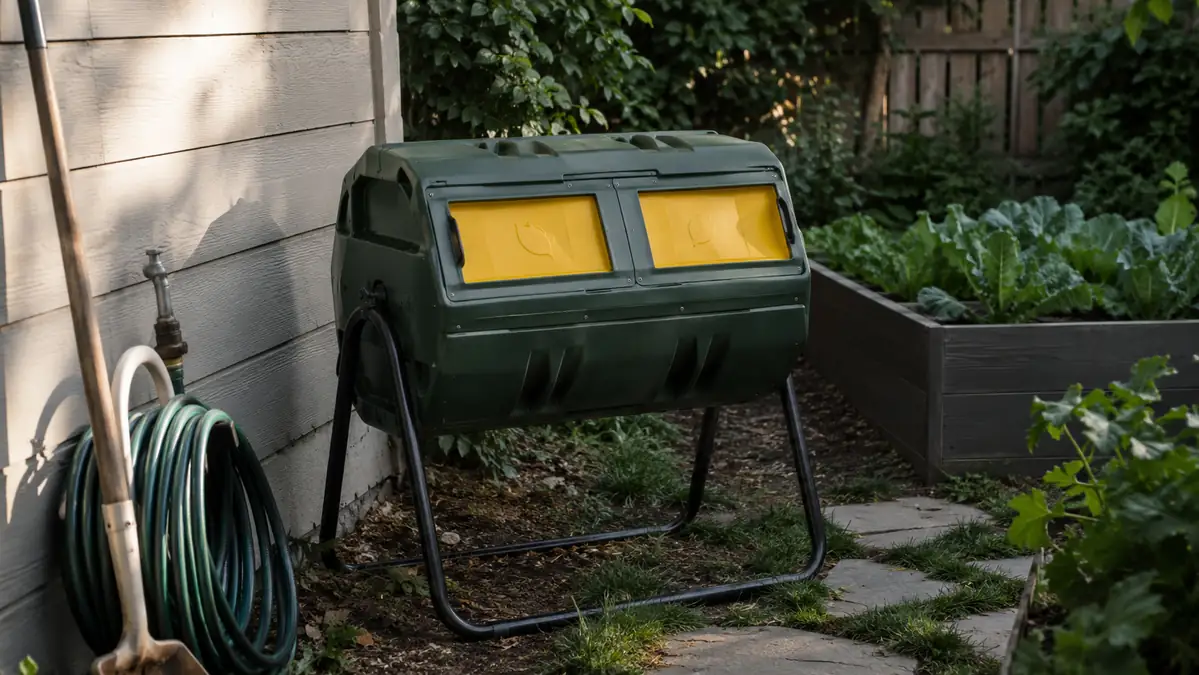
I bought this F2C compost tumbler in January of last year because my open pile behind the garage had turned into a raccoon buffet and a running joke with my neighbor Carla, who could smell it every time the wind shifted toward her patio. Eighteen months and somewhere around 250 pounds of kitchen scraps later, I can tell you exactly what the product listing on Amazon doesn't: what sticks, what needs a wrench every few months, and what actually turns into usable compost versus what just sits there looking the part.
This isn't going to be a glowing five-star writeup. I use this bin almost every day, my hands have been in both chambers more times than I can count, and I've got specific complaints alongside specific praise. If you're trying to decide whether this particular 43-gallon dual-chamber tumbler is worth setting up in your own yard, this is the review with the parts other people leave out.
I should also say upfront that I'm not new to composting. I ran an open three-pallet pile for almost six years before this, so I had a baseline to compare against. That matters here, because a lot of the glowing reviews you'll find online are written by first-time composters who have nothing to measure the F2C tumbler against. I do, and that's shaped a lot of what follows.
The Quick Verdict
A genuinely useful upgrade over an open pile, but the assembly, the sliding doors, and the marketed 43-gallon capacity all need a reality check before you buy.
Amazon Check Today's Price →Tired of raccoons treating your compost pile like a drive-through?
This dual-chamber tumbler keeps scraps sealed, off the ground, and out of reach. See today's price and current availability on Amazon.
Amazon Check Today's Price on Amazon →How I've Actually Used It (Not the Marketing Version)
The setup is simple in concept: two side-by-side chambers on a steel frame, each with a sliding door, and you fill one chamber while the other finishes breaking down. In practice, I load chamber one for roughly six to eight weeks with kitchen scraps, coffee grounds, and shredded cardboard, give it a quarter turn most mornings on my way to let the dog out, then switch to chamber two once the first is full and let it cook while I fill the second side. That's the whole system, and when it works, it works well.
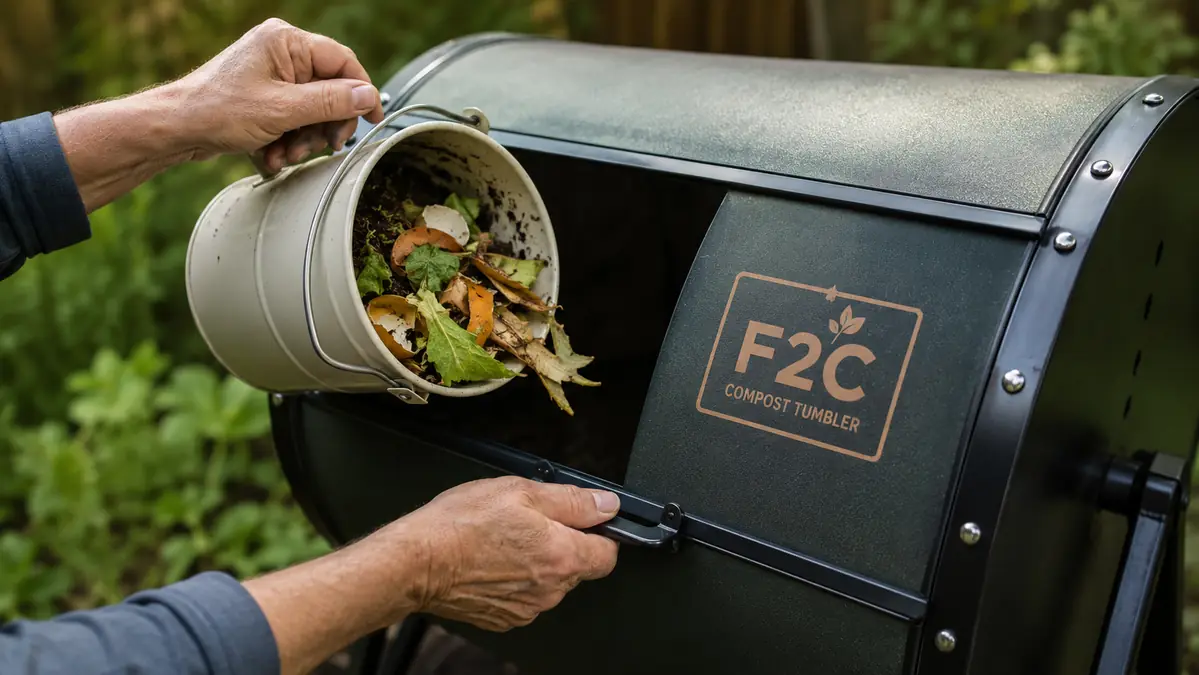
What the F2C listing photos don't show is how much browns you actually need to keep in the mix. My first two months were a wet, compacted mess because I was tossing in banana peels and coffee grounds without balancing them against dry leaves and shredded newspaper. Once I started keeping a bag of dried leaves next to the bin and adding a handful with every scrap deposit, the smell disappeared and the breakdown sped up noticeably. That's not a flaw in the tumbler, it's just something nobody tells you before you buy one.
The turning mechanism is where I have my first real complaint. Once a chamber gets more than about two-thirds full, especially with wet kitchen scraps in the mix, cranking it over takes real effort. I'm not a small person and I still find myself bracing a foot against the frame some mornings to get it moving. If you've got shoulder or back issues, this is worth knowing before you commit.
Assembly deserves its own mention too, since it's the first thing you deal with and it colors your whole impression. Mine took just under two hours with a second set of hands holding the frame steady while I bolted the drum in place. The included hardware bag was short one bolt, which meant a trip to the hardware store before I could finish. It's a minor thing, but if you're assembling this alone on a Saturday afternoon expecting a quick thirty-minute job, plan for longer.
The Build Quality Nobody Warns You About
F2C is not a heritage garden brand with decades of tooling behind it, and the tumbler tells you that in a few specific spots. The steel frame itself has held up fine, no rust after a full winter and a humid summer in central Ohio, but the plastic sliding doors are the weak point. Mine developed a slight warp on one door around month nine, likely from summer heat since the bin sits in a spot that gets afternoon sun. It still closes, but it takes a firmer push than it used to, and I've heard from other owners in gardening forums that theirs eventually needed a bungee cord to stay shut tight.
The axle bolts that let the drum rotate on the frame loosened twice in my first year, both times around the six-month mark. It's a five-minute fix with a wrench, but if you're not the type to do basic maintenance on your outdoor gear, budget for that annoyance. I now check them every time I switch chambers and it's become part of the routine rather than a surprise.
The 43-gallon capacity number on the listing is technically accurate but functionally misleading. That's total volume across both chambers combined, and once you account for the airspace you need to leave for turning material over, each side realistically holds closer to 16 to 18 gallons of actual usable compost material before turning gets difficult. If you're picturing one giant bin that swallows a full season of yard waste, recalibrate that expectation now.
The legs and the way the whole frame sits on the ground are worth a note too. My yard has a slight slope where the tumbler sits, and I noticed after the first few months that one leg had sunk about half an inch into the soil while the others hadn't, throwing the whole unit slightly off level. I ended up setting four paving stones under the feet, which solved it completely, but it's an extra step the instructions never mention and one I'd have appreciated knowing about before setup day.
What 18 Months of Actual Breakdown Looks Like
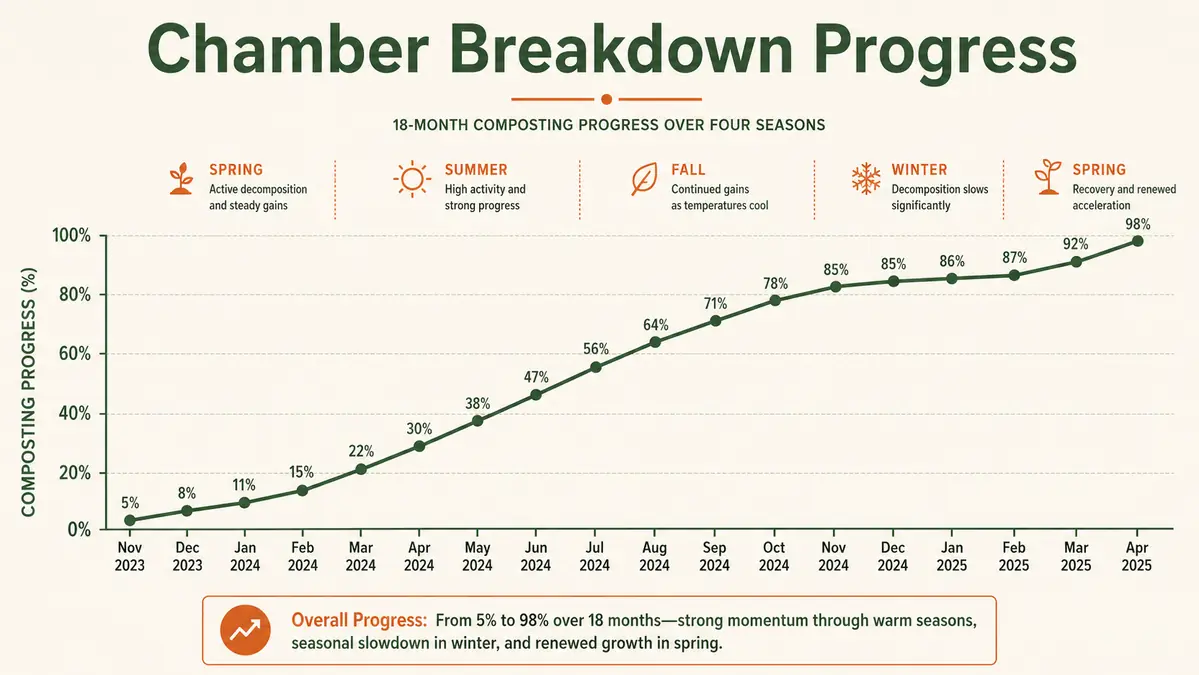
In warm months, with a good greens-to-browns ratio and regular turning, I get finished compost in six to seven weeks. That matches roughly what F2C claims in their materials, so credit where it's due. Where the marketing gets optimistic is winter. Once outdoor temperatures dropped below the mid-40s here, the whole process slowed to a crawl, sometimes stalling out almost completely for six to eight weeks at a stretch. The tumbler design doesn't insulate against cold the way people assume a sealed bin would.
I ended up wrapping the chambers in an old moving blanket during the coldest stretch of January and February, which helped some but didn't fully solve it. This is a normal limitation of tumbler composting in general, not unique to F2C, but I hadn't seen it mentioned clearly enough before I bought mine, so I'm flagging it here.
By the numbers over the full 18 months: I filled and emptied chamber one nine times and chamber two eight times, which works out to roughly 17 full batches of finished compost that went into my raised beds and around my rose bushes. The quality has been consistently good, dark, crumbly, and earthy-smelling, not sour or slimy, which tells me the dual-chamber system does what it's supposed to do once you understand its actual limits.
The Smell and Pest Test, Beyond the Marketing Claims
Since the whole reason I bought this was to stop annoying Carla next door, I've paid close attention to smell specifically. Standing directly next to the tumbler with a chamber freshly loaded, you'll catch a faint earthy scent, nothing offensive. From six feet away, even with both doors closed loosely, I genuinely can't smell it, and Carla confirmed the same thing when I asked her directly about a year in. That part of the F2C tumbler has delivered exactly what I hoped for.
Pests are a slightly different story. Raccoons haven't gotten into it once in eighteen months, which was the entire point, and that alone justified the purchase for me. But I did have one incident in the second summer where I found a small gap between the door track and the drum wide enough for a determined mouse to squeeze through during a stretch when I'd left the chamber underfilled. Packing the chamber fuller and checking the door alignment after every turn solved it, but it's worth watching for if your yard has a rodent population like mine does.
Tradeoffs I Didn't Expect Going In
Pest control is genuinely better than my old open pile, but it's not pest-proof. I had fruit flies inside the chamber twice during hot months, both times traced back to me leaving citrus peels in too heavy a layer without covering them with browns. Once I corrected that habit, the fly issue went away. It's manageable, just not the fully sealed, zero-maintenance system some of the product photography implies.
The sliding doors also let in less air than I expected, which is good for retaining moisture but bad if you're prone to overloading with wet scraps like I was early on. You'll need to actively manage airflow by leaving the doors cracked occasionally during heavy wet-scrap weeks, something the included instructions mention in one line and easily miss.
Weight is the other thing nobody mentions. A fully loaded chamber, especially with wet food scraps mixed in, gets heavy enough that turning it isn't a one-finger job the way the marketing videos make it look. Those videos are almost always filmed with a chamber that's maybe a third full. Once you're actually running this daily and both sides are loaded the way real composting requires, expect to use your whole body, not just a wrist flick, to get the drum rotating.

Alternatives I Considered Before Buying This One
Before landing on the F2C tumbler, I looked hard at just building a three-bin wooden compost system myself, and at a couple of single-chamber rolling tumblers from other brands. The wooden bin route is cheaper up front and holds more volume, but it demands more physical turning with a fork and doesn't keep pests out nearly as well, which was my whole reason for switching in the first place.
The single-chamber tumblers I looked at solve the capacity issue better in some ways, since there's no dividing wall eating into usable space, but you lose the ability to have one batch finishing while you're actively adding fresh scraps to the other. For a household that generates scraps daily like mine does, the dual-chamber layout on this F2C unit ended up being the better fit even with its quirks.
I also briefly considered a countertop electric composter after seeing ads for one, but the price difference was significant and those units produce a dehydrated grounds material rather than true finished compost you can dig straight into a bed. For actual garden amendment rather than just scrap reduction, a tumbler like this one still made more sense for what I needed.
What I Liked
- Dual chambers let one batch finish while you keep filling the other
- Cuts down pest and rodent access dramatically compared to an open pile
- Finished compost quality has been consistently good, no sour smell or slime
- Steel frame has resisted rust through a full winter and summer
- Turning is hands-off compared to forking an open pile
Where It Falls Short
- Plastic sliding doors warp with heat and loosen over time
- Axle bolts need re-tightening roughly every six months
- Real usable capacity per chamber is noticeably less than the 43-gallon headline number suggests
- Turning gets physically hard once a chamber is more than two-thirds full
- Composting nearly stalls in cold winter months without extra insulation
It's not the maintenance-free miracle bin the photos suggest, but eighteen months in, I still choose it over a fork and an open pile every single morning.
Who This Is For
If you're a household that generates daily kitchen scraps, has a yard where an open pile has become a pest or smell problem, and you don't mind a few minutes of basic maintenance every couple months, this F2C tumbler is a solid, affordable step up. It's especially good for anyone gardening in raised beds who wants a steady, manageable supply of finished compost rather than one giant seasonal batch.
It's also a good fit if you live in a neighborhood with close-set houses, like mine, where smell and visible pile aesthetics genuinely matter to the people around you. The enclosed design has done more for my relationship with Carla next door than any conversation ever did.
Who Should Skip It
If you generate large volumes of yard waste, like several bags of leaves every fall or grass clippings from a big lawn, the real per-chamber capacity here will frustrate you fast. Anyone with shoulder, back, or grip strength limitations should also think twice, since turning a full chamber takes genuine effort. And if you live somewhere with a long, hard winter, go in knowing the tumbler will slow to a near stop for a couple months a year no matter what you do.
I'd also steer you away from this if you're the type who wants to set it and forget it entirely. Even with the dual chambers doing most of the work, you still need to balance greens and browns, check the doors, and tighten a bolt now and then. It's less work than an open pile by a wide margin, but it isn't zero work, and going in expecting zero is where most of the disappointed reviews online come from.
Ready to stop feeding raccoons and start feeding your garden beds?
Eighteen months in, this is still the tumbler doing the job in my backyard. Check current price and availability before it changes.
Amazon See Today's Price on Amazon →