
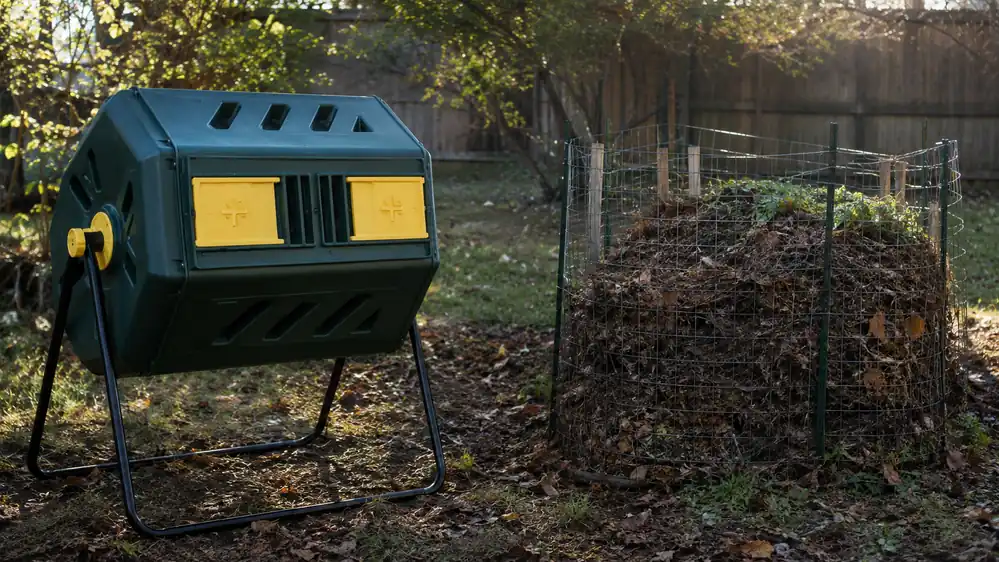
If you're trying to decide between a compost tumbler and just piling your yard waste in a corner like most of us started out doing, here's the short answer: the tumbler finishes faster and keeps the mess contained, but the open pile costs nothing and holds more volume if you've got the space to let it sit. I ran an open wire bin for years before switching to a dual-chamber F2C tumbler last spring, so this isn't a comparison built from spec sheets. It's built from a full year of turning both, one after the other, in the same backyard with the same kitchen scraps and yard waste.
The short version: if you want compost you can actually use in a season, and you're tired of raccoons getting into your scraps, the tumbler wins on nearly every practical measure. If you've got a big property, don't mind waiting six months to a year for a batch to finish, and would rather not spend money on equipment at all, the open pile still gets the job done, just slower and with more effort per pound of finished compost. The real difference comes down to how each method holds heat and moisture, how much physical work turning actually takes, and what you're willing to tolerate in terms of smell and pests.
| Feature | F2C Compost Tumbler | Open Compost Pile |
|---|---|---|
| Average Time to Finished Compost | 5 to 11 weeks depending on season and mix (F2C dual-chamber tumbler) | 6 months to a year, often longer if turned infrequently |
| Turning Effort | Rotate the sealed drum on its axle, under a minute per side when not overloaded | Fork the whole pile by hand, 10 to 20 minutes for a medium-sized heap |
| Pest Resistance | Sealed chambers with sliding doors, raccoons and rodents can't get in | Open to wildlife, food scraps routinely attract raccoons, rats, and flies |
| Odor Control | Enclosed drum traps smell inside, minimal odor even with food scraps added | Can turn sour and ammonia-smelling when wet material sits uncovered |
| Space Required | About 3 by 5 feet footprint for the steel frame and drum | Typically 4 by 4 feet minimum, often larger for a three-bin system |
| Upfront Cost | Today's price sits well under $50 for the 43-gallon dual-chamber unit | Free if you're just piling waste, or the cost of wire fencing and stakes |
| Capacity | 43 gallons total split across two chambers | Unlimited, scales with how much yard space you're willing to give up |
| Best For | Suburban yards, kitchen scraps, gardeners who want finished compost within a season | Large rural properties, gardeners with no budget and no rush |
Where the F2C Compost Tumbler Wins
The single biggest difference I noticed switching to the F2C tumbler was speed, and it wasn't close. My old open pile took the better part of a year to turn fall leaves into something I'd actually dig into a vegetable bed, and that was with me forking it over every couple of weeks when I remembered. The tumbler's sealed drum holds heat and moisture far better than an open heap ever could, and my fastest batch, a late-summer mix of fresh grass clippings and coffee grounds, finished in about five weeks. Even my slowest batch over a cold snap, sitting closer to eleven weeks, still beat anything I ever pulled off the open pile in the same stretch of winter.
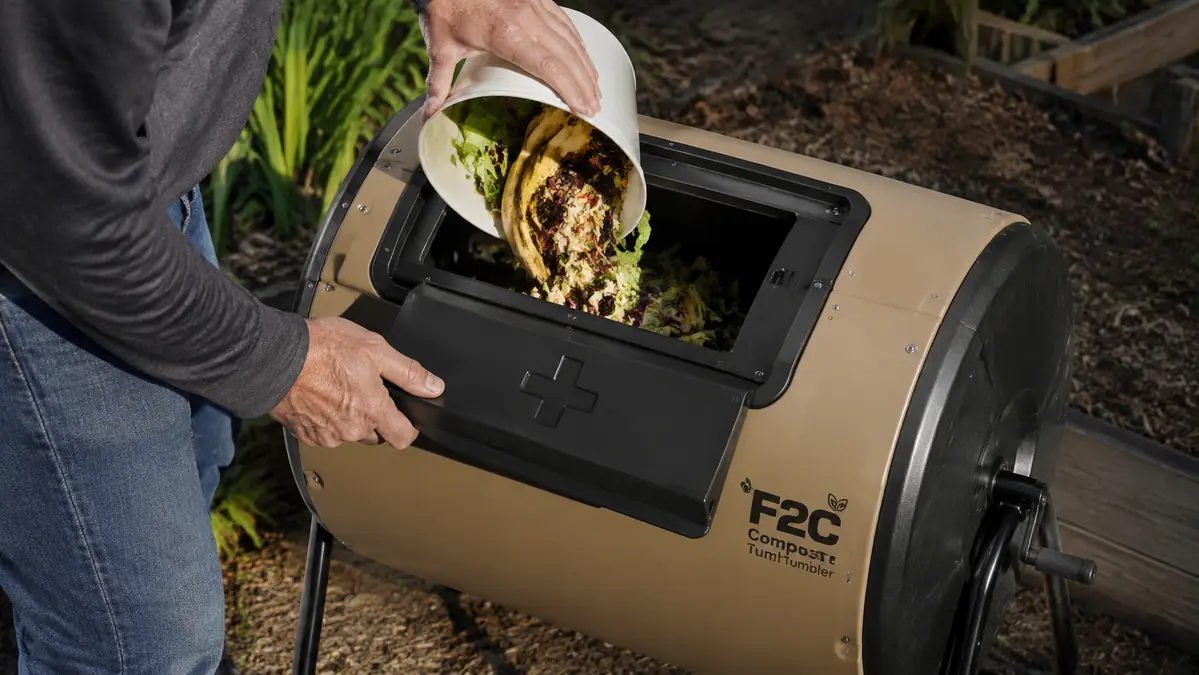
The other thing that sold me was what stopped happening once the pile went away. Raccoons got into my open bin twice in one summer, scattering half-finished compost across the lawn and leaving a mess I had to rake up before the next mow. Since switching to the F2C tumbler, with its sliding doors and fully enclosed drum, that's never happened once. No wildlife can get a paw or a snout into a sealed chamber, and because the drum traps the smell inside instead of letting it drift across the yard, I've never had a neighbor mention it, which was not always true with the old pile in a wet spring.
There's a third reason the tumbler wins for me that doesn't show up on a spec sheet: the dual-chamber layout means I'm never managing a single pile at two different stages at once. With the open bin, fresh scraps always ended up mixed into material that was halfway finished, which meant I was constantly digging around trying to find the older, darker compost buried under last week's grass clippings. With the F2C, one chamber stays sealed and curing while the other fills, so I always know exactly which batch is ready and which one still needs weeks. That kind of separation sounds small until you've spent a Saturday morning sifting through a mixed pile trying to find enough finished compost for a single raised bed.
Where the Open Compost Pile Wins
None of this means the open pile is worthless, and I want to be honest about where it still makes sense. It costs nothing beyond a roll of wire fencing, and if you've got a rural property with room to spare, you can pile up leaves, brush, and grass clippings without ever worrying about hitting a capacity limit. My 43-gallon F2C tumbler filled up completely during last October's leaf drop and I had to hold the overflow in a separate pile until a chamber opened back up. An open pile just keeps growing. If you're managing acreage rather than a suburban half-acre, that unlimited capacity is a real advantage a tumbler can't match.
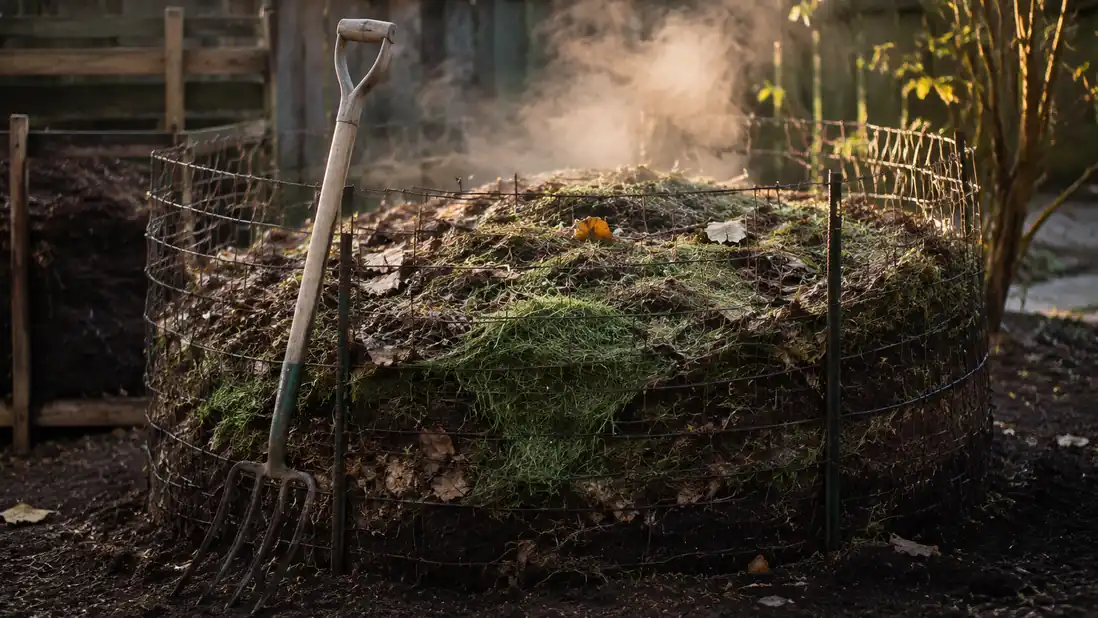
The open pile also asks nothing of you if you're not in a hurry. You can toss material on and walk away for months, and eventually gravity and time will do the work even if you never touch a pitchfork. That passive approach isn't fast, and it's not tidy, but it's genuinely lower effort in the moment, even if it costs you more effort per pound of finished compost over the long run. If you've got a compost need that's mostly about clearing yard debris rather than producing usable compost on any kind of schedule, a simple wire pile still does that job without spending a dime.
Scale is the other place the open pile pulls ahead. A single F2C tumbler tops out at 43 gallons total between both chambers, which is plenty for a typical suburban half-acre but nowhere near enough if you're clearing brush off two acres or running a small hobby farm. An open pile, or a row of three-bin systems, can absorb an entire fall's worth of leaves, storm debris, and garden cleanup without ever hitting a wall. If your composting need is really about volume disposal rather than producing a specific amount of usable compost on a schedule, the open pile's lack of a capacity ceiling is worth more than any amount of finish speed.
Tired of raccoons wrecking your pile every summer?
The F2C dual-chamber tumbler seals scraps away from wildlife and cuts finish time from months to weeks. Check today's price and current availability on Amazon.
Amazon Check Today's Price on Amazon →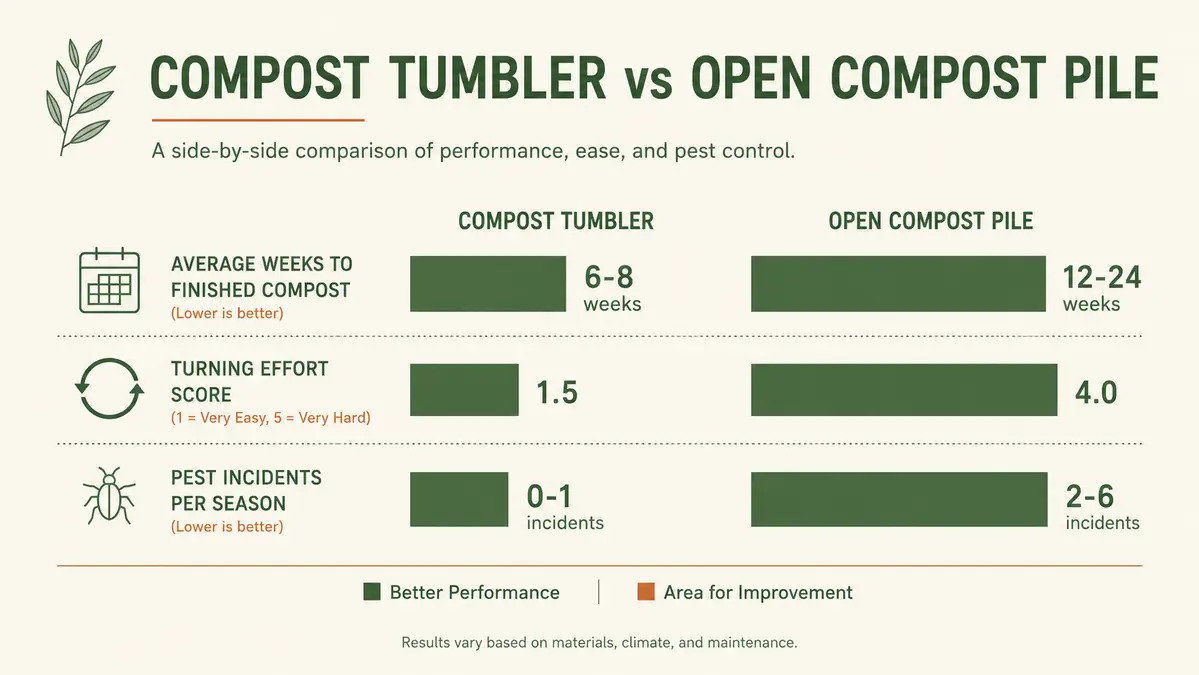
Maintenance and Mess: What Each One Actually Asks of You
Cleaning an open pile mostly means dealing with what wildlife or weather leave behind. After a raccoon raid, I'd spend twenty minutes raking scattered material back into a rough heap and repairing a bent section of wire fencing. Rain turns the top layer into a slick, matted crust that needs breaking up before you can fork it properly, and in a genuinely wet spring the whole pile can sour and start smelling like ammonia if it's not getting enough air circulation through the middle.
The F2C tumbler asks for a different kind of upkeep. Turning each chamber every two to three days takes under a minute when it's not overloaded, though a fully loaded drum after a big batch of wet grass clippings gets genuinely heavy to rotate. The sliding doors have held up well over a year of use, though the track on one chamber started sticking around month eight and needed a shot of silicone spray to fix. Neither method is maintenance-free, but the tumbler's issues are mechanical and predictable, while the open pile's issues are mostly about weather and wildlife you can't control.
Winterizing is another spot worth mentioning. My open pile needed nothing special going into the cold months, just a tarp thrown over it during heavy snow to keep the top layer from freezing solid. The F2C tumbler doesn't need winterizing either since there's no pump or seal to worry about, but I do give the drum's rotation points a light coat of grease each fall so the axle doesn't stiffen up in freezing temperatures. Neither method demands much, but the tumbler's steel frame and drum have held up through a full year of sun, rain, and two weeks below freezing without any rust or cracking, which is more than I could say for the wire fencing on my old pile after a few seasons outside.
Quality of Finished Compost: Does the Method Actually Matter
This is the question I got asked most by neighbors once they saw the F2C tumbler sitting in my side yard: does compost from a sealed drum actually turn out as good as the stuff that finishes in an open pile? After a year of comparing batches side by side, my honest answer is that the end product is nearly identical once both are fully finished. Dark, crumbly, earthy-smelling material either way. The tumbler's advantage isn't quality, it's consistency and speed. Sealed chambers hold moisture evenly through a dry August in a way an open pile just can't, and I never got the streaky, half-composted patches in the tumbler that I used to find buried in the middle of the old wire bin.
Where the open pile sometimes has an edge is in sheer biological diversity. An uncovered pile gets colonized by worms, beetles, and other soil organisms that a sealed tumbler mostly excludes, and some gardeners swear that mix of critters speeds up the later stages of breakdown and improves the finished texture. I didn't notice a meaningful quality gap in my own beds either way, tomatoes and peppers grew just as well in soil amended with tumbler compost as they did in years past with pile compost, but if you're chasing maximum microbial diversity over raw speed, that's a point in the open pile's favor worth knowing about.
Who Should Buy Which
If you're gardening on a typical suburban lot, dealing with kitchen scraps that need to stay away from raccoons, and you want finished compost you can actually use within a growing season, the F2C tumbler is the clear pick. The dual-chamber design means you're never staring at an empty bin waiting on a single batch to finish, and the sealed drum solves the two biggest complaints I ever had with an open pile: pests and odor. If you're on a large rural property with no real pest pressure and no urgency about turnaround time, or you simply don't want to spend anything on equipment, the open pile still works. It's just slower, messier, and asks for more raw physical effort every time you turn it with a fork. My honest take after running both is that I kept the open pile around for bulky yard debris like fallen branches, but every scrap that needs to become usable compost in a reasonable timeframe goes straight into the tumbler now.
Ready to stop forking over a pile that never seems to finish?
See current pricing and availability on the F2C 43-gallon dual-chamber tumbler.
Amazon Check Today's Price on Amazon →